


Between 2017 and 2020, esports looked like the next frontier of sports marketing. Franchise fees for Overwatch League spots reached between $20 million and $60 million. Paris Saint-Germain launched PSG Esports. FC Schalke 04 paid €8 million for a spot in Europe's top League of Legends competition. David Beckham co-owned an esports organization. Analysts drew comparisons to the NFL.
By 2023, the Overwatch League had shut down, offering buyouts to teams that had each paid $20 million or more for their franchise spots. Major esports organizations posted significant losses. Layoffs spread across the industry.
None of that makes esports irrelevant for brands in 2026. It does make the question of how to approach it significantly more important than it was when everyone was chasing the same franchise model.
Why brands loved the jersey-logo model
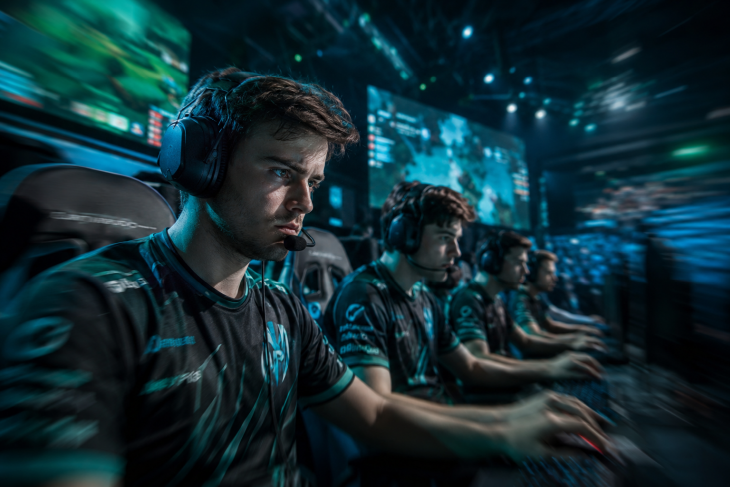
The appeal was straightforward. Esports offered something legible to any marketer who understood sports: a professional structure, a captive audience, and a clear product to sponsor. Teams trained like athletes, competed in proper leagues, and played to large viewership numbers.
More importantly, it was brand-safe. Teams in franchised leagues operated under publisher rules that limited public controversy. Sponsoring a top-tier esports organization carried the same basic logic as sponsoring a top-flight football club: put the logo on the jersey, associate with the best, move on.
There was also a simpler reason: most marketing teams did not understand gaming deeply, and "esports" gave them an entry point that mapped onto something familiar. Gaming equals competition. Competition equals teams and tournaments. Sponsor the teams and the tournaments. The logic was clean. The ROI, for most, was not.
The structural problem nobody wanted to name
Team sponsorships kept brands at the edge of the experience. The audience showed up for the players, the rivalries, and the game. Brand recall from jersey logos in esports has consistently been minimal. Fans there for Faker are not there for your product.
Beneath the optics was a deeper conflict. Esports organizations, under pressure from sponsors to generate content and engagement metrics, increasingly expected their players to be content creators alongside competitors. But players had spent years, often from their mid-teens onward, focused on one thing: winning. Their careers depended on performance, not production.
Organizations needed content. Players needed reps. Brands expected engagement numbers that logo placements could not generate. The unsustainability of the model showed up clearly in the Overwatch League: teams had each paid upward of $20 million to enter, and the league ultimately offered buyouts before folding entirely in 2023.
Where did the viewers actually go?
They went to individuals.
According to Stream Hatchet's 2024 Live Streaming Trends Report, 45% of all esports viewership that year came from co-streaming channels, totaling 1.3 billion hours watched. Co-streaming means a content creator takes the official tournament broadcast and adds their own live commentary on top of it. No studio, no production team. Just a person and their audience. By Q1 2025, co-streaming viewership had surpassed official esports broadcast viewership for the first time.
The reason is not technical. Viewers follow personalities. A co-streamer they have watched for years makes even a familiar competitive format feel personal. They react to chat. They take sides. They say things the official broadcast cannot afford to say.
This is not a niche trend or a single-year anomaly. It reflects a structural shift in how esports audiences actually consume content. And it has a direct implication for brands: the attention is following the person, not the production.
What Los Ratones proved about personality-driven esports
In late 2024, professional caster and streamer Marc "Caedrel" Lamont founded a League of Legends team called Los Ratones, built around personalities rather than recruited competitive talent alone. The team competed first in the Northern League of Legends Championship, a regional tier-2 competition, winning all three splits in 2025.
In early 2026, Los Ratones were invited to compete in the LEC, Europe's top League of Legends circuit. The results were immediate. According to Esports Charts data, Los Ratones became the most-watched team in LEC Versus 2026, averaging over 408,000 viewers per match across official and co-streaming channels. Their match against G2 Esports peaked at approximately 585,000 concurrent viewers.
When Los Ratones were eliminated from the competition and Caedrel stopped co-streaming the event, peak viewership dropped from around 600,000 to 397,000.
The drop confirmed what the broader co-streaming data had already suggested: the audience is following a person, not a team, and not a league. For a brand deciding where to put its esports budget, that is the most important number in this article.
Is traditional esports sponsorship still worth it?
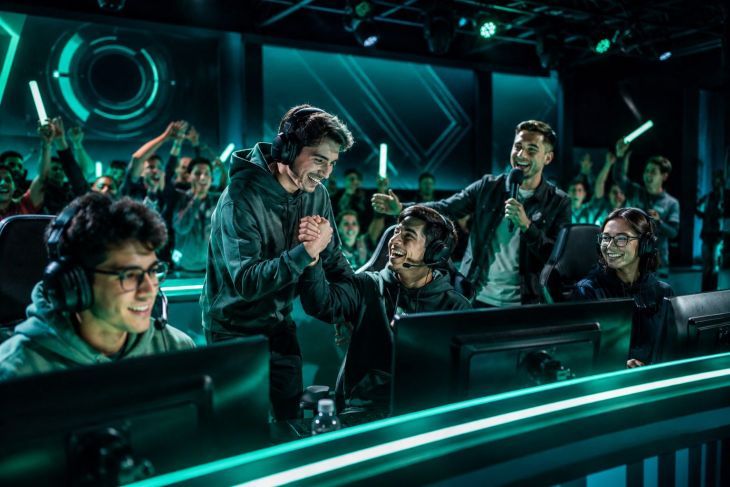
Yes, in specific circumstances.
If you have a long-term, image-driven budget and the goal is to be seen alongside the best players in the world, top-tier team sponsorship still delivers. The audience at major tournaments is highly engaged, technically skilled, and spends significantly more on hardware and gaming peripherals than average consumers. It is a narrow demographic, but one that is difficult to reach anywhere else and one that pays close attention to brands that show up consistently.
Traditional esports sponsorship also makes sense as an entry point for brands already fluent in sports marketing. If logo placement on broadcast surfaces, player appearances, and tournament branding are part of a familiar playbook, that model translates to professional esports without friction.
What it does not do well is generate scale, meaningful brand recall, or shifts in perception among casual gaming audiences. A jersey logo requires either very specific business objectives or a very large budget to justify.
The case study brands should study: the Mlekpol Protein+ Battle
Mlekpol, a Polish dairy brand, did not sponsor a team. It built a tournament where the community was the main character.
The Łaciate Protein+ Battle brought together five prominent League of Legends content creators, including Veggie, Anterias, and Natan Zgorzyk, as team captains. Each captain led a team named after a product benefit: Team More Taste, Team Power, Team Strength, Team Time. Viewer recruitment happened live on stream, turning the selection process itself into content. A dedicated Media Day built pre-tournament tension through streamer banter and trash talk. The Grand Finale featured a PLN 10,000 prize pool, with inStreamly technology displaying non-intrusive branded content across all participating streams throughout the campaign.
The numbers:
- 1,012,768 total campaign views
- 126% of planned KPI delivered
- +17pp ad recall
- +16pp brand consideration
- +13pp brand affinity
- Influencer content at 187% of target KPI with approximately 3% average engagement rate
The most telling indicator was organic. Viewers in stream chat began writing "GGWP Łaciate!" after matches. The brand had become part of the community's vocabulary during the campaign, not a logo passing through it.
The format worked because Mlekpol was not a background sponsor. It was the reason the event existed. The audience watched people they already followed compete with each other. The brand was the context for an experience viewers genuinely wanted to have.
What does your brand actually need to enter this space?
Not a gaming identity. Not a team sponsorship deal. Not a massive budget.
What it needs is clarity about which role the brand can authentically play. Three questions help define this before the brief is written.
First: is the goal reach or depth of engagement? Large-scale events with prominent co-streamers can generate significant reach. Influencer-led tournaments create deeper and more lasting brand association. These objectives call for different formats and different ways of measuring success.
Second: is there a reason for this brand to be in this specific gaming context? Mlekpol's protein product line connected naturally to the performance and strength language of competitive gaming. That connection does not need to be literal, but it needs to exist. Brands that appear without a reason get filtered out by audiences that are very good at detecting when something does not belong.
Third: what is the brand adding to the experience? The esports campaigns that generate genuine brand affinity are the ones where the brand's presence makes the experience more interesting for viewers, not more commercial. Mlekpol made the tournament happen. T-Mobile made a phrase part of streaming culture. The brand role is to add something to the moment, not tax it.
Fun-first esports is early enough that brands entering now have room to define what meaningful presence looks like. Within two years, the formats that work will be replicated at scale. The relevant question for marketing teams right now is not whether esports belongs in the media plan. It is whether your brand builds the reference point, or copies someone else's.
Key takeaways
- 45% of esports viewership in 2024 came from co-streaming channels, not official broadcasts. The audience follows personalities, not productions.
- Creator-founded teams consistently outperform traditional franchised teams in viewership. When the personality leaves, the audience follows.
- Jersey-logo sponsorship still works, but only with long-term commitment and specific audience objectives. It does not translate to casual gaming audiences.
- The alternative to sponsoring an event is building one. Mlekpol's Łaciate Protein+ Battle delivered 126% of planned KPI and organic community validation because the brand was the reason the event existed.