


Product placement in games is older than most marketers think and more complex than most briefs acknowledge. The same mechanic that makes a branded item feel like a natural part of the world can, done wrong, become the thing players screenshot and mock on Reddit within hours. The difference between the two outcomes is not budget. It is understanding how games work and what players actually tolerate.
Gaming communities are not passive audiences. They are organized, vocal, and fast. A placement that doesn't fit the game's world will be found, documented, and publicly dissected before the campaign debrief is even scheduled. That raises the stakes significantly. It also raises the ceiling for what's possible when the integration works.
What can brands actually do inside a game?
The range is wider than most briefs acknowledge. At the passive end: static billboards on virtual city streets, branded vehicles, licensed products appearing as background details. These generate impressions without changing gameplay and require minimal production effort.
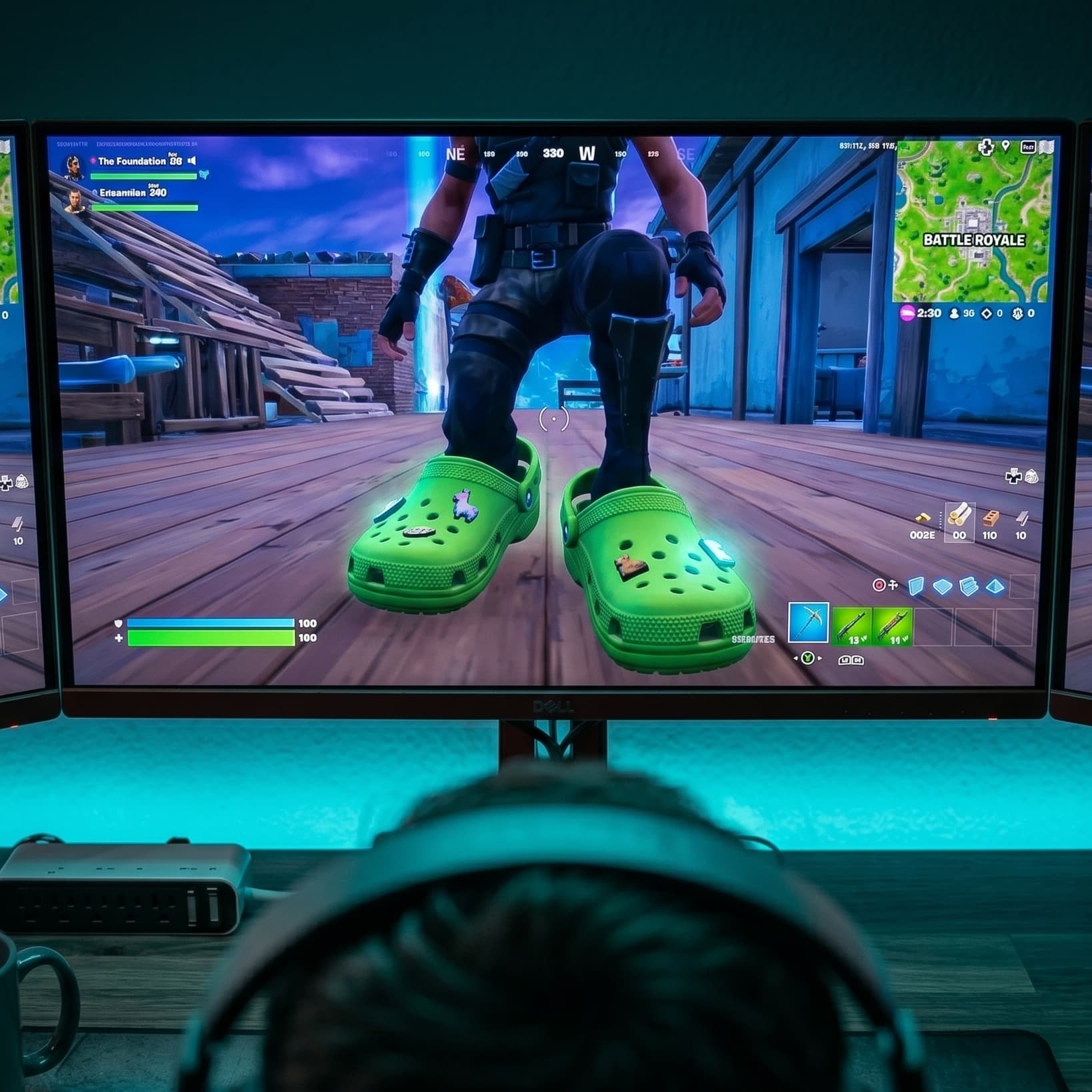
Moving further in: branded cosmetics and skins that players purchase or unlock, sponsored in-game events, named locations that carry brand identity without interrupting play. Further still: functional items with brand logic built in, full branded game worlds, and game modes built around a commercial idea.
Each point on that spectrum has different production requirements, different cost implications, and different reception patterns. Understanding which format serves the campaign goal, the game's world, and the audience's expectations is the decision most brands skip to reach the format they're most comfortable with.
The only rule that matters
The best placements are ones players don't immediately recognize as advertising. The test is simple: does this item belong in this world? If a player has to consciously override their sense of immersion to process the brand, the placement has already failed. The brand became visible at the cost of the experience.
This is why the brand must always be the backdrop and never the centerpiece. Players are in a game to play, not to be sold to. A brand can be the context for a great gaming experience. It cannot be the reason the gaming experience is interrupted.
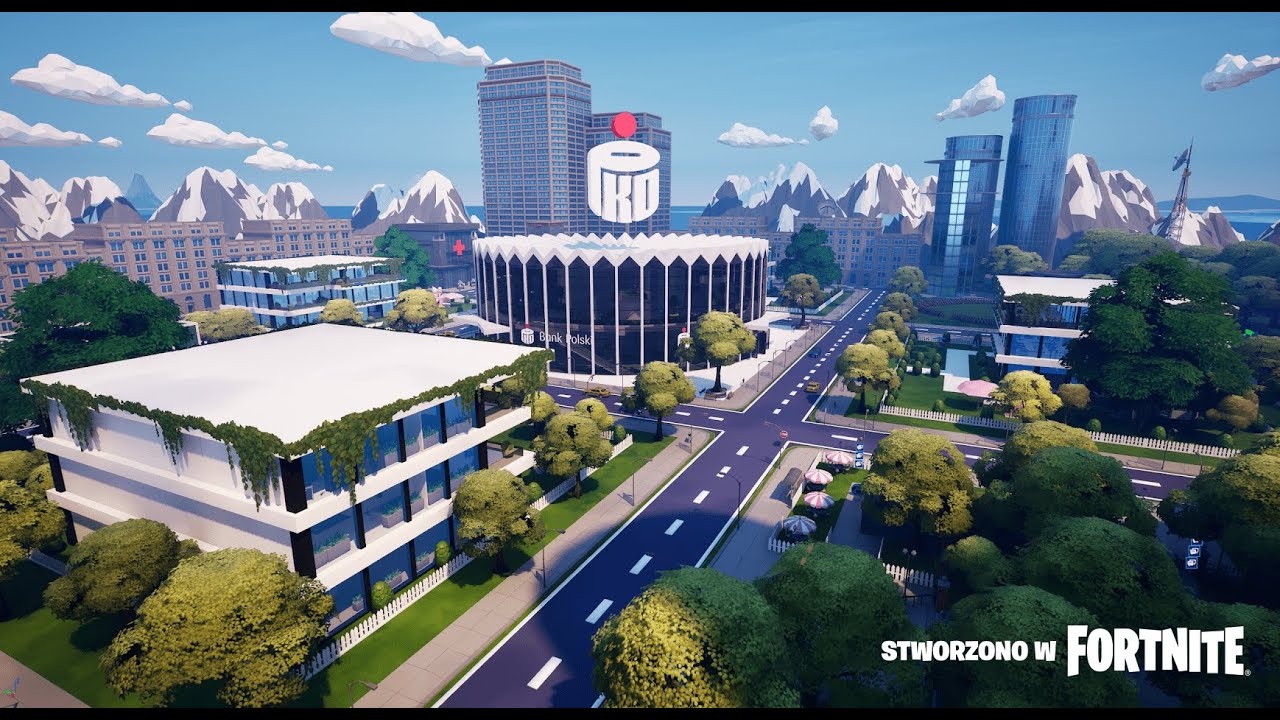
PKO Bank Polski understood this when they built a Tycoon mechanic in Fortnite around wealth-building and investing. The bank was woven into the gameplay logic, not placed on top of it. Players managed virtual accounts and ran businesses because that was the game - the brand was where those mechanics naturally lived. The result was 26 minutes of average session time. That doesn't happen when players feel like they're being advertised at.
When the game mechanic becomes the sales mechanic
In 2025, Mercado Livre won the Entertainment Lions Grand Prix for Gaming at Cannes with a campaign called Call of Discounts. The campaign took Prop Hunt, a Call of Duty mode in which players hide by disguising themselves as everyday objects, and turned it into a live shopping event.
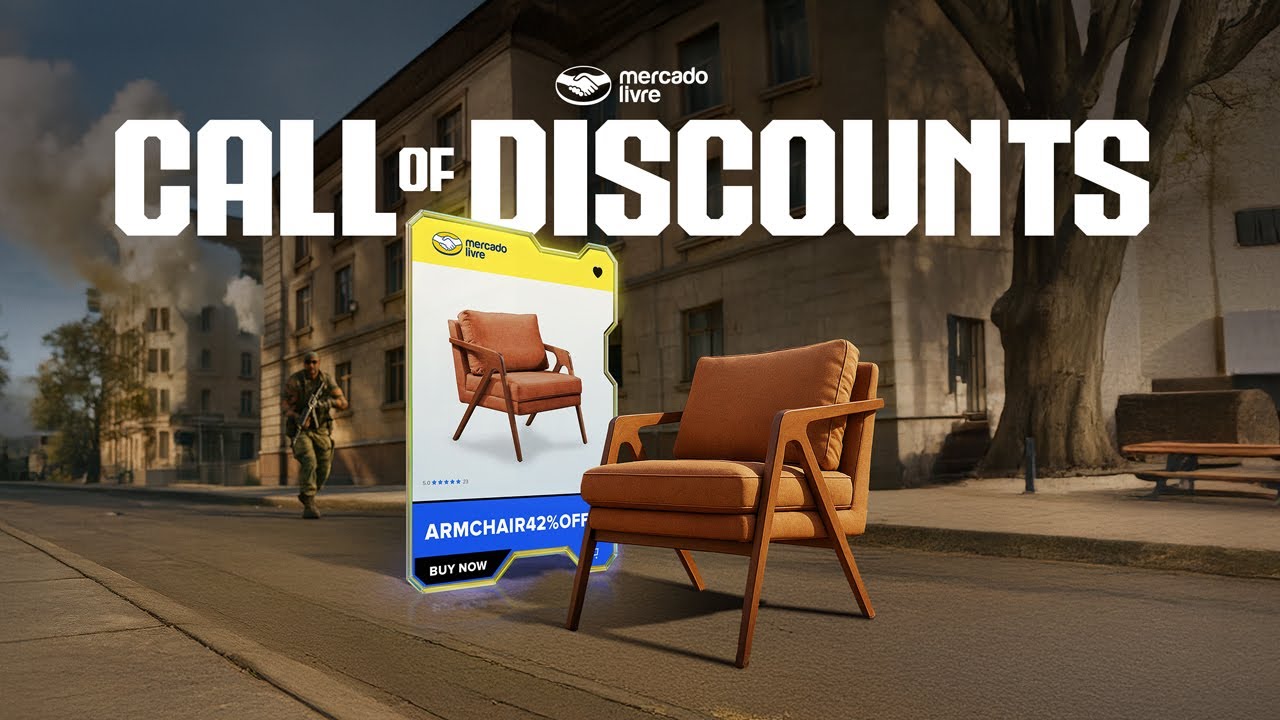
Neymar Jr. joined a Twitch stream and disguised himself as items from Mercado Livre's catalog: a toaster, a lamp, an armchair. Pro players hunted him through 420 drops mapped across 16 maps, each linked to a real product. The faster Neymar was eliminated, the bigger the discount that appeared on screen for viewers watching. 16,000 discount coupons were redeemed in 45 minutes. The stream reached 180,000 viewers, the most-watched live on Twitch that year in Brazil. Total sales driven: $1.3 million.
The brand didn't interrupt the game. It used the game's own logic to create the commercial mechanism. The discount depended on gameplay. The gameplay was the entertainment. The entertainment sold the products. Each layer supported the others.
What made Death Stranding's Monster Energy work?
In 2019, Hideo Kojima put a Monster Energy can in Death Stranding. Not in the background. The protagonist Sam's canteen literally converted water into Monster Energy. Drinking it restored stamina. It was a functional item, mechanic and sponsor simultaneously.
Players loved it. It was absurd, committed, and so perfectly matched to both the brand's identity and the game's exhausting post-apocalyptic tone that it generated more earned media than most campaigns ten times its cost. When the Director's Cut was released in 2021 and the Monster Energy cans were removed due to licensing changes, the community's reaction was to build mods that restored them. Players who hadn't bought the Director's Cut cited the missing Monster Energy as their reason.
A brand became so embedded in a game world that its absence generated protest. That is not product placement. That is cultural ownership. The mechanism behind it is straightforward: Monster Energy respected Death Stranding's logic completely, then found the one place within that logic where the brand fit perfectly. There was no compromise. The integration was either fully committed or it wasn't there at all.
What consistently irritates players
Three patterns consistently produce backlash. The first: brands that force every integration to deliver a gameplay boost. The logic seems obvious — players drink your energy drink and run faster — but it often produces placements that are mechanically awkward, tonally wrong, or so disconnected from the brand's actual identity that they read as manufactured rather than designed.
The second: expecting scale from a single game. Every game is a specific community with specific habits and specific expectations. A branded activation in Roblox reaches Roblox's audience. A placement in a Fortnite map reaches Fortnite's players. These are distinct groups. Assuming that being in one game reaches all gamers is a brief-level misunderstanding of how gaming culture works.
The third: placing brand visibility above gameplay quality. Players notice when the creative priority shifted from "how do we make this fun" to "how do we make the logo bigger." Communities find it, talk about it, and the organic conversation becomes the campaign's legacy. The reverse is equally true: when a placement genuinely adds to the experience, communities defend it, share it, and remember it for years.
What fashion brands figured out on Roblox
Fashion has developed a specific version of in-game product placement that deserves attention from any brand operating in style or lifestyle categories. The insight driving it comes from Roblox's own research: 70% of Gen Z users borrow ideas from their physical selves when designing their avatars. Players dress their virtual characters the way they would dress themselves, or the way they wish they could.
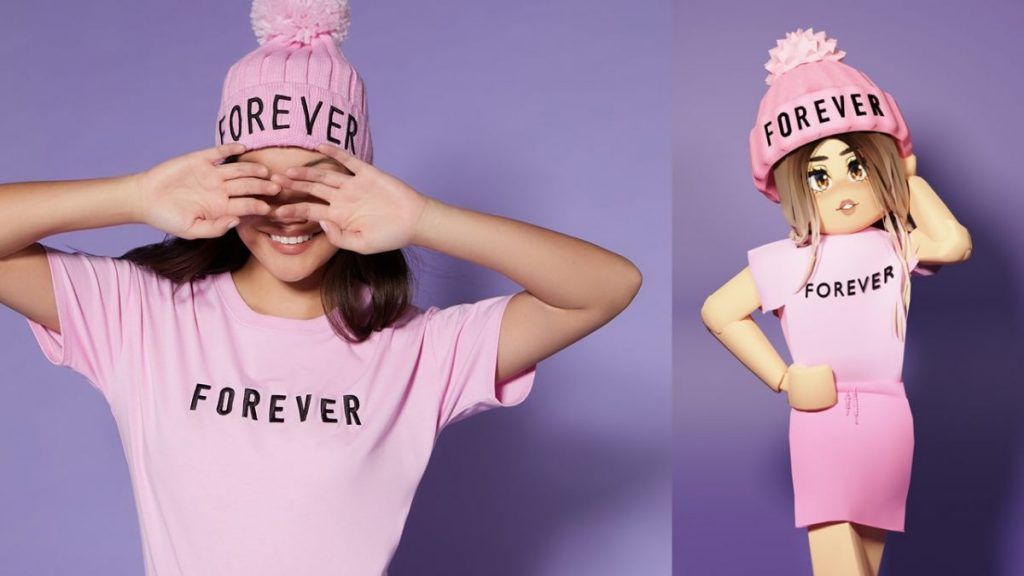
Forever 21 took this seriously. They opened a virtual store on Roblox, built around a gameplay mechanic where users compete to run the best shop. A simple black beanie sold as a digital item for around 70 cents became one of the brand's highest-performing items ever, on track for 1.5 million purchases. When Forever 21 moved the beanie into their physical collection, they described it as the world's first "metaverse-tested" fashion release. The digital world had served as a product lab: fast to produce, cheap to test, and a direct signal of what the audience wanted to own.
Source: Forever 21
The implications for brands extend beyond fashion. A product that earns genuine demand inside a game is a product that has already passed a real consumer test. The pipeline from in-game popularity to real-world purchase is not theoretical. Forever 21 demonstrated it in retail. Mercado Livre demonstrated it in e-commerce. The mechanism in both cases is the same: earn attention and desire inside the game, then build the bridge to the purchase.
Three mistakes worth naming
Expecting one-to-one brand representation. Different platforms have different content rules. Minecraft prohibits displaying brand logos directly. GTA V allows branded products and locations but requires logos to be modified slightly, so realistic recreations exist but with altered names. Fortnite and Roblox operate differently again, each with their own content review processes. Assuming a brand can appear exactly as it does on packaging or in a store window, without understanding the platform's constraints, leads to either rejected campaigns or forced compromises that undermine the integration.
Ignoring the phygital bridge. A brand placing a product in a game has a natural opportunity to connect the in-game presence to real-world behavior. A product purchase that unlocks an in-game item. An in-game achievement that generates a real discount. A branded challenge in a game with a physical prize for top performers. These connections extend the value of the placement without adding significant production cost and they create the kind of interaction that traditional advertising formats structurally cannot.
Underestimating indie and AAA game integrations. Most brands go to Fortnite, Roblox, and GTA V because those are the platforms they've heard of. The underexplored opportunity is working directly with game developers — indie or AAA — whose worlds create a genuinely premium context for brand integration. Death Stranding is the reference point here. These partnerships are rarer, more complex to negotiate, and require building a direct relationship with game studios. But as an article on brand integration in gaming notes, brands that enter gaming contexts authentically earn substantially more durable brand association than those that appear as interruptions.
Where does this leave media planners?
The framework for in-game advertising is more developed now than it was three years ago, and the creative reference points are much stronger. Cannes Grand Prix campaigns, Monster Energy mods, and Roblox fashion labs are not outliers. They are examples of what happens when a brand treats the game's world as something worth respecting rather than something to advertise inside.
The decision tree for any brand considering in-game placement starts with one question: what does this add to the experience? Not what does it cost, not how many impressions does it generate, but what does a player get from it that they wouldn't have without it. Mercado Livre made discounts faster to unlock. Monster Energy made a brutal journey slightly more sustainable. Forever 21 gave avatars something they wanted to wear.
The brand that answers that question well will be the one players defend on Reddit instead of mocking.
Key takeaways for marketers
- The game's logic comes first. Every successful in-game placement fits inside the world it enters, rather than sitting on top of it.
- Every game is a specific community with a specific DNA. Placing in one game reaches that community's audience, not all gamers.
- Branded cosmetics and skins are the lowest-risk entry point. Players who want them buy them; players who don't ignore them.
- The phygital bridge is underused. In-game presence can connect directly to real-world purchase behavior when the path is designed intentionally.
- Fashion and ecommerce have proven the pipeline: in-game demand translates to real-world purchase when the brand earns it through genuine integration.