


In-game marketing has become one of the most effective tools for capturing and retaining user attention. In a world where traditional media fight for a viewer’s glance during the first 1–3 seconds, games offer something rare: a context of active attention. The player does not scroll, does not multitask, and is fully immersed in the experience. That is why advertising in games – from placements to dynamic formats and technology-based integrations – works better today than traditional models.
The data is clear. According to McKinsey, 73% of time spent gaming is high-concentration time, and the average session lasts from 30 minutes up to several hours. This level of engagement cannot be compared to the short, fragmented consumption of social media or linear television.
This is precisely why more and more brands – from FMCG to telecom and healthcare – treat games as a fully-fledged communication environment and one of the most important channels in the attention economy.
What is in-game marketing (and why does it work better than traditional advertising)?
In-game marketing includes all advertising activities embedded within games: from static billboards in virtual worlds, through dynamic banners updated in real time, to full gameplay integrations, events, and custom content.
Unlike traditional advertising, in-game marketing operates in a focused environment. The player assumes the role of a participant rather than a passive viewer, which fundamentally changes how the message is perceived. This is a so-called “lean-forward” activity: the user engages, makes decisions, reacts to stimuli, and follows the course of events.
This context is what makes games one of the few places where advertising still functions naturally. It does not have to compete for attention with other screens or fight for a “hook” in the first second – in games, alignment, timing, and narrative consistency matter most. Research by IAS & Neuro-Insight shows that contextually matched ads are 40% more memorable than mismatched content.
Games therefore offer something no other medium can: immersion and context that naturally enhance message effectiveness.
Ad formats in games: from placements to interactive experiences
Advertising in games today is a broad category encompassing many formats. Each offers brands different opportunities, and the choice depends primarily on the effect you want to achieve – scale, immersion, interaction, or long-term presence.
To make comparison easier, below are the key types of in-game marketing along with their use cases.
Static in-game ads
These are permanent objects within the game environment – billboards, posters, branded architectural elements. They most often appear in sports games (FIFA, NBA2K), racing games, or open-world titles.
Static formats work well when scale and high visibility are the goal, without the need for interaction. They are similar to classic outdoor advertising, but within a game environment.
Dynamic in-game ads
These allow creatives to be updated in real time – depending on region, date, or campaign conditions. This format works particularly well for large digital campaigns that require frequent creative changes or precise targeting.
Dynamic formats give brands flexibility and optimization capabilities similar to programmatic advertising.
Branded items / skins / in-game assets
Brands can appear in the form of items, mods, clothing, skins, or vehicles. This format is exceptionally natural in games where personalization is a core part of the experience (e.g. Fortnite, Roblox, The Sims).
It is worth remembering that gamer communities highly value authenticity – if an item does not fit the game’s narrative or aesthetic, it is rejected.
Product placement and branded content
The brand becomes part of the game world: it appears in scenes, dialogue, or mechanics. In this case, it is not just “present” but co-creates the context.
Global examples include fashion brand integrations in RPG games or cosmetic collaborations in The Sims.
In-game events
This is one of the most engaging formats. Brands can organize concerts (Fortnite), community events, or full activations that become part of the gameplay.
They stand out for their scale and intensity of interaction – and, most importantly, they permeate gamer culture beyond the game itself.
UGC and brand worlds in Roblox / Fortnite Creative / UEFN
These are full experiences that players can explore, visit, and co-create. Brands gain enormous flexibility here: they can build their own worlds and “play” their narrative.
Global examples include Gucci Garden in Roblox or the PKO map created in Fortnite.
Contextual advertising in livestreaming
This is a format that is gaining popularity thanks to technology that matches messages to what is happening in the stream. Using AI and voice recognition, the ad appears at a moment that makes sense (e.g. a streamer says “I’m hungry” and a food brand’s creative appears on screen). Contextual advertising is not limited to voice recognition alone – it also includes many other mechanisms that enrich campaigns.
This type of advertising builds not only attention, but also authenticity – it does not interrupt content, but becomes part of it.
In-game marketing vs. traditional advertising: two different attention economies
In traditional media, audiences devote less and less attention to advertising. Content is consumed “in the background,” alongside other activities.
Gaming works the opposite way: the player is actively engaged. As Wiktoria Wójcik, CEO of New Game+ and an attention economy expert, notes, brands today must primarily think about how to maintain audience attention – not just how to reach it. Games provide an environment in which that attention naturally exists.
The key difference is this: in traditional advertising, the brand tries to capture attention; in games, it operates in an environment that already guarantees it.
As a result, in-game marketing builds not only awareness but also brand preference, as confirmed by brand lift studies.
New Game+ case studies: engaging in-game marketing campaigns
New Game+ delivers campaigns that leverage the attention economy and inStreamly technologies – contextual tools for reaching livestream audiences. Below are selected examples showing how in-game marketing translates into real results.
Danone – Small Hunger x Fortnite
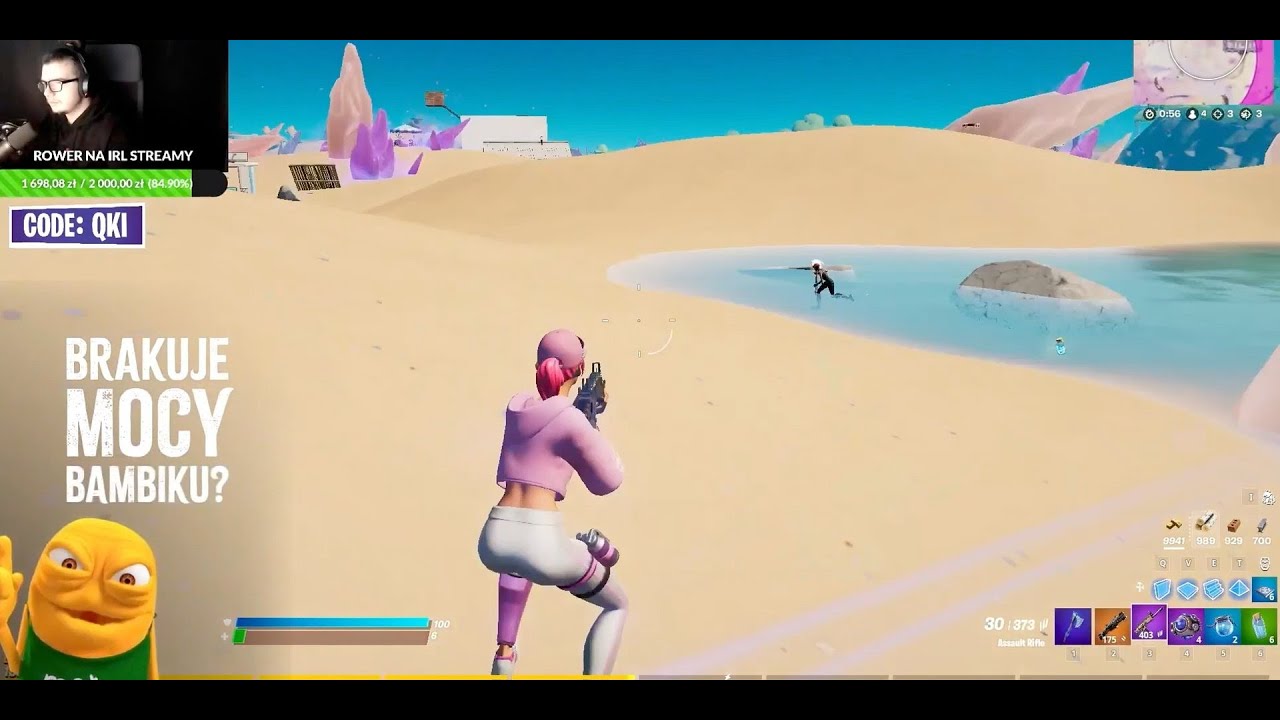
In this campaign, the Danio brand hero reacted to drops in character energy in Fortnite. Thanks to gameplay analysis technology, the ad appeared at exactly the right moment – naturally and humorously.
Result: over 650,000 views during a one-week activation and positive community reactions to the non-intrusive placement.
Algoflex – Pain Ambassadors

NPCs who “live in pain” became health ambassadors. Voice recognition technology triggered brand creatives when a streamer talked about pain or fatigue.
Result: 21,666 hours of screen time, high engagement, and as much as 59% reach of the entire gaming community in Hungary. The campaign won Best Work of the Year at the Hipnózis Awards 2025.
T-Mobile – The Fastest Network
When the streamer said the phrase “The Fastest Network,” a brand animation appeared on screen. The community quickly picked up the mechanic and encouraged streamers to trigger the message.
Campaign results:10,000 natural mentions of the claim+11 pp in brand recall+16 pp in brand affinity
Cheetos – Chepard Game
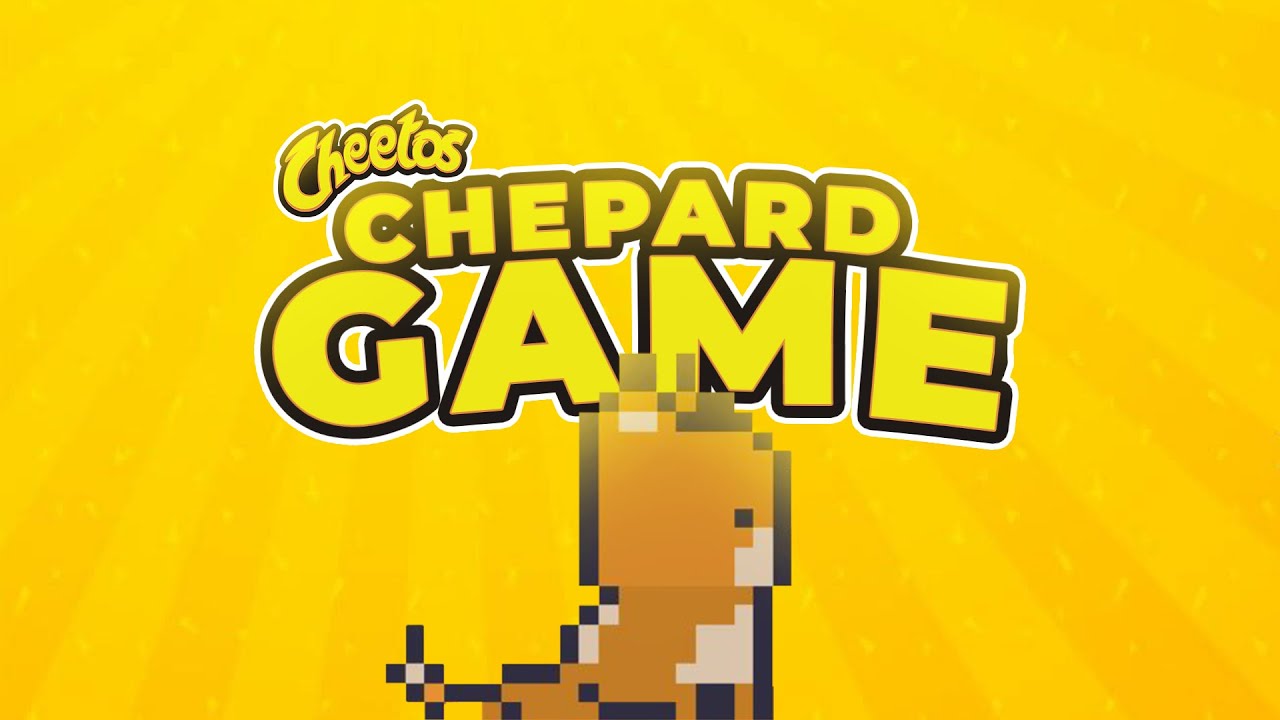
The first large-scale game embedded in Twitch. Viewers could take care of a virtual cheetah using chat commands that influenced the character’s development.
Campaign results:220 streamers3.2 million views50,000 interactions
This shows that advertising in games does not have to be an add-on – it can become an integral part of the experience.
The effectiveness of in-game marketing: data and insights brands should know
Games differ from other media not only in terms of immersion, but also in measurable indicators of attention quality.
Key data from the Gaming & Advertising Attention Report 2024 prepared by Dentsu and Lumen Research:
57% brand recall on Twitch vs. 38% digital/social benchmark+17% brand choice uplift in gaming vs. ~7% standard digital/social100% viewability for rewarded video – users watch ads voluntarily and to completion10,043 seconds of attention score per 1,000 impressions (rewarded video), more than online video or social media
New Game+’s own data from over 1,000 campaigns shows that +20–30 pp brand recall is standard rather than an exception – with some activations reaching even +40 pp.
These are qualitative proofs that games are not only a scalable medium, but above all the most effective environment for building brand memory and preference.
The future of in-game marketing
The direction is clear – games are becoming not so much an advertising channel as a social space where users spend most of their time. This is a fundamental shift for brands – from campaigns to long-term presence.
What will shape the coming years?
Greater automation through AI and contextual tools.The growing role of user-generated worlds (Roblox, Fortnite Creator).Games as new social media and “third places” for younger generations.Advertising that does not interrupt, but co-creates the experience.
In-game marketing is no longer an add-on in marketing budgets – it is becoming one of the most important touchpoints in brand communication in the attention economy.
Sources:
- McKinsey – The Attention Equation: Winning the Right Battles for Consumer Attentio – an analysis of attention quality and the monetization of different media formats.
- Integral Ad Science – The Context Effect: Biometric Study on Contextual Advertising – a study on the impact of contextual ad alignment on memorability and audience response.
- dentsu & Lumen Research – Gaming & Advertising Attention Report 20242024 – a joint analysis of attention in gaming environments.