


The brief makes it sound simple. Build a branded world inside Fortnite, players show up, brand awareness grows. What actually happens is different. The creative decisions, technical constraints, promotion logic, and measurement questions that come with a branded Fortnite map tend to arrive mid-project, under deadline pressure, when most of them should have been settled weeks earlier.
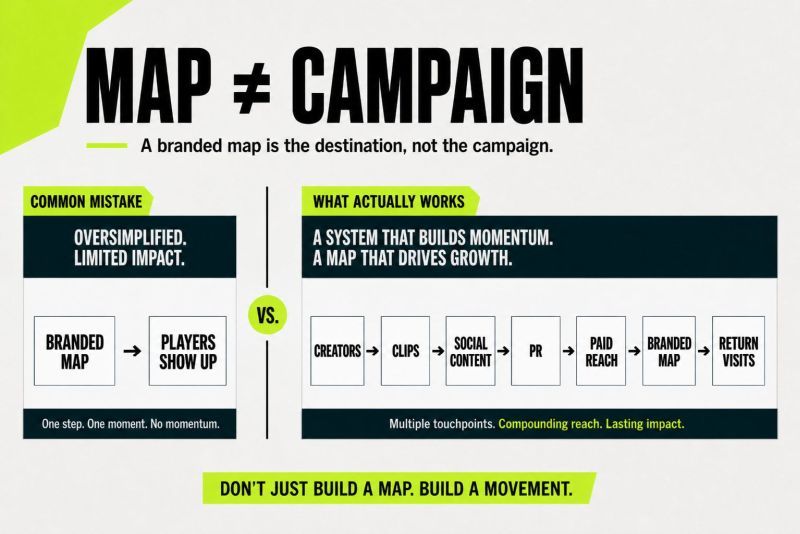
Fortnite has 650 million registered users and roughly 110 million monthly active players. The platform is large enough to justify serious investment. The mistake most brands make is treating the map as the campaign. It isn't. The map is the destination at the end of a campaign. This guide covers the decisions that determine whether you build something players return to, or something that goes live with a hundred plays and no traffic strategy.
What a Fortnite map can and cannot do for your brand
Align on this before anything else.
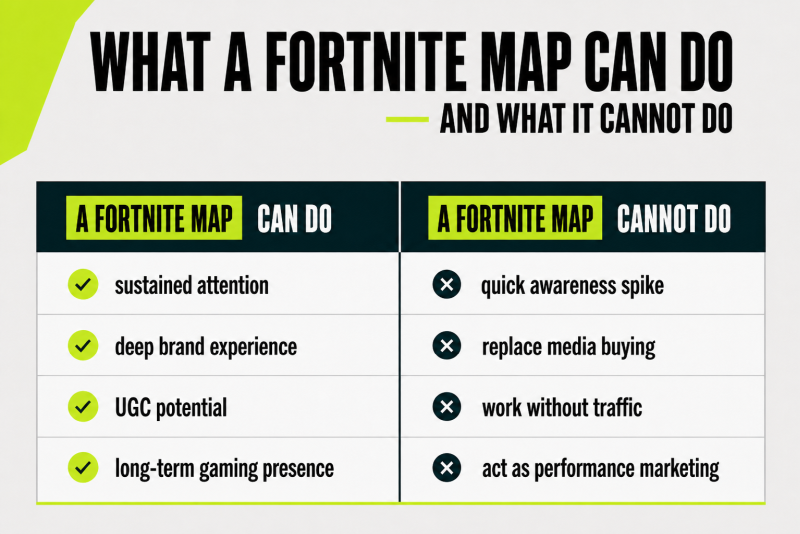
A branded Fortnite map is good at sustained attention across multiple sessions, deep brand experience that players actively choose, UGC generation from players who create content about your world, and long-term presence inside a gaming context. It is not a reach vehicle on its own. It does not deliver quick awareness spikes. It is not performance marketing.
The map sits at the bottom of the funnel. Players who make it to your branded island are already engaged with gaming, already in a context where your brand can earn real attention rather than interrupt something else. Getting them there is a separate challenge that requires a separate plan. Every brand that has launched a Fortnite map without a promotion budget has discovered this mid-campaign.
What should players do for the first ten minutes?
This is the most important question in a branded Fortnite map project. Not what the brand wants to communicate. Not which colors appear on screen. What players actually do.
Maps built around brand messaging fail. Maps built around gameplay succeed. The distinction matters more in Fortnite than almost anywhere else, because players arrive with a clear frame of reference. They have played hundreds of maps. They know within sixty seconds whether what they are playing is interesting. A loading screen full of brand logos and product information is not a game. Players exit before they reach the first mechanic.
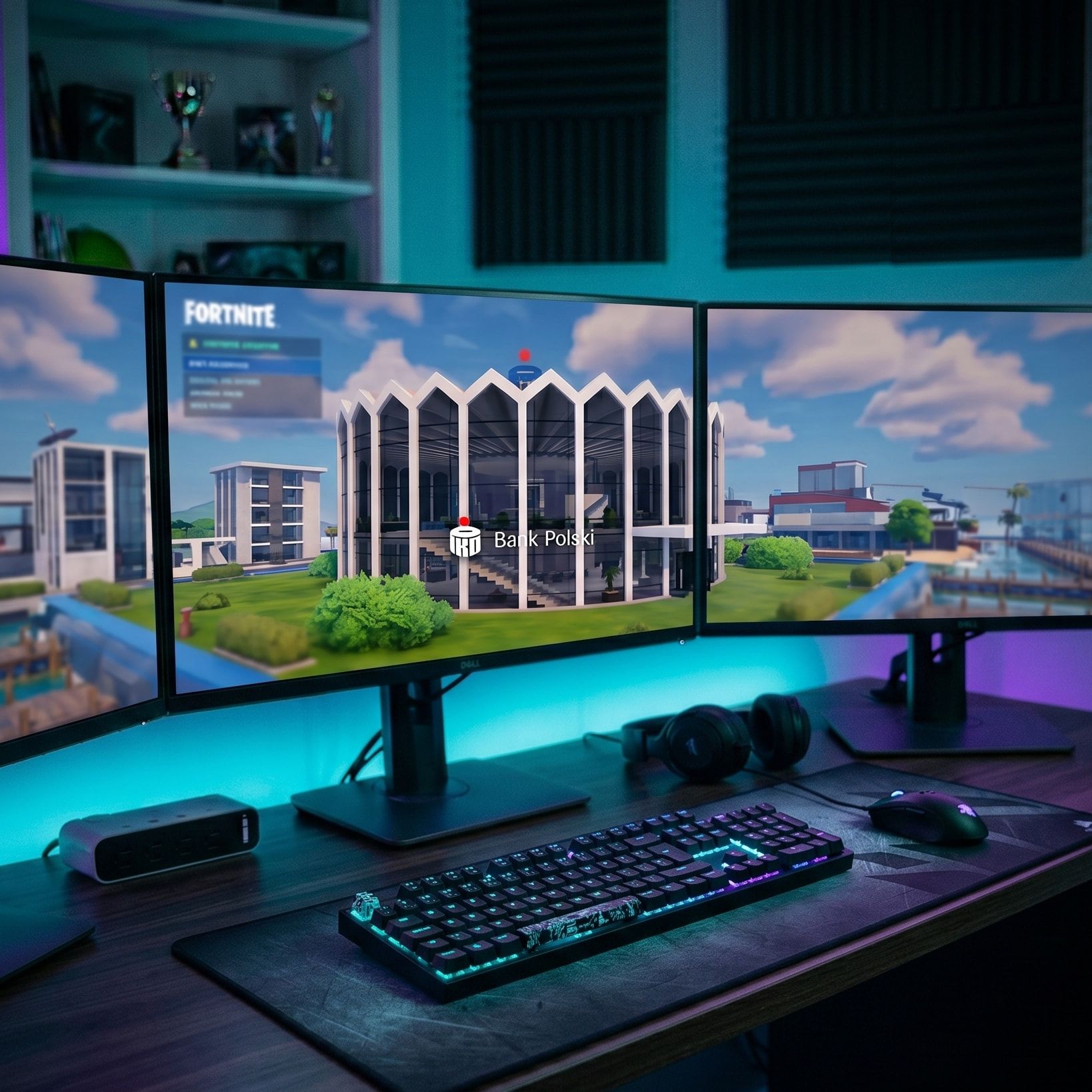
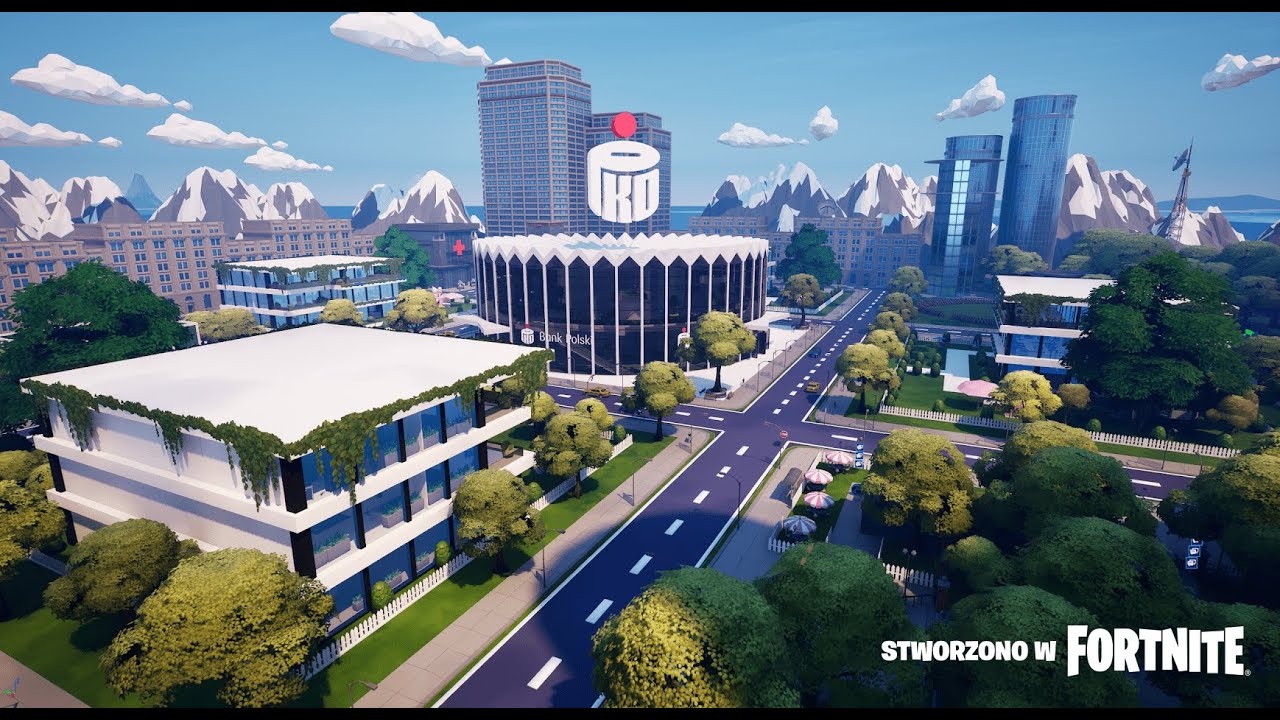
The gameplay mechanic needs to connect to the brand in a way that feels like context rather than advertising. PKO Bank Polski did this with a Tycoon mechanic: players opened virtual accounts, ran businesses, and managed money. Financial literacy was the theme, but wealth-building and investment were the game. The result was a 26-minute average session. That number does not come from interrupting people with a product message.
Philips OneBlade took a different route. Their Body Royale map, which debuted at TwitchCon 2025, placed players inside a giant human body covered in body hair: thick tufts acted as cover, shaving nostrils gave power-ups, and avoiding certain zones required both reflexes and a sense of humor. The product was the entire world, but the game came first. Players were not being sold a shaver. They were playing a game that happened to be absurdly about one.
The test to apply at concept stage: would players enjoy this map if the brand were removed? If yes, the integration is working. If no, you have an advertisement with a map skin.
Does the first minute pass?
The opening sixty seconds carry most of the weight. If those seconds are slow, text-heavy, or logo-forward, players leave. Average session times of one to two minutes sound acceptable for a website. For a game, they indicate a serious problem.
The priority order is: make minute one compelling, then minute two, then minute five. The gameplay loop should reward staying, not just arriving.
Two patterns to watch for here. First: multiplayer maps designed for full lobbies. A 5v5 competitive mode breaks when a solo player shows up and has nothing to do. Any branded map intended to run for months needs to work as a satisfying experience for one player. Second: padded playtime. Long walks between objectives, quests that require waiting, progress bars that fill themselves. These inflate average session length without producing the quality of engagement that creates brand memory.
Design small and complete rather than large and padded. A ten-to-fifteen-minute experience that players genuinely enjoy and replay is worth more than an hour-long map they abandon after eight minutes. Replayability comes from challenges, seasonal updates, side quests, and competitive elements that give players a reason to come back — not from stretching the first visit artificially.
How much of the brand is too much?
The visibility spectrum runs from subtle environmental branding to full brand immersion. Most successful branded maps sit closer to the subtle end.
Brand elements that work without disrupting gameplay: loading screens, item names, environmental details, NPC characters, reward systems. These carry the brand without stopping the game to deliver it.
Brand elements that break the experience: forced messaging during gameplay, visual design that clashes with Fortnite's aesthetic, product explanations embedded as mandatory content.
The brand should feel like the setting, not the teacher. The mechanic can reference what the brand does — that is where the creative opportunity lives. But the center of the experience is always what the player does next.
One more thing about Fortnite specifically: the game does not have to involve shooting. Despite its Battle Royale reputation, the platform supports a wide range of mechanics. Combat elements can be present but entirely non-violent in tone, or absent altogether. What matters is matching the game mechanic to something genuine about the brand's territory, then building that into a mode players actually want to play.
Who builds this, and what to look for
The production path for a branded Fortnite map has three main options: independent island creators, game development studios, or a full-service gaming partner who handles strategy, build, and campaign together.
What to look for in whoever builds the map: published maps with actual player data (not just portfolio screenshots), genuine familiarity with Fortnite's current creative ecosystem, and a process that includes playtesting by people who actually play the game. A map that looks good but does not play well loses players in the first session. There is no recovery from that.
Timeline realities: a basic Fortnite Creative map takes a minimum of six to eight weeks. A complex build in UEFN (Unreal Editor for Fortnite), which gives access to full game development capabilities, can take six months. Brand approval cycles routinely extend both. The most common source of delay in branded Fortnite projects is not the build itself but the internal review process on the brand side.
One part of the build that often gets skipped: playtesting with real Fortnite players, ideally streamers who play the game regularly. A map that is fun to play and a map that is fun to watch are not always the same thing. For any branded map supported by a streamer campaign, both dimensions matter before launch.
Where does traffic come from?
A published map with no promotion is an island no one visits.
Organic discovery on Fortnite does not work for new branded maps. The platform favors maps with existing play counts and engagement history. New branded maps almost never gain traction without an external push. The promotion plan needs to be built before the map launches, not assembled after the play numbers come in.
Creator partnerships are the most effective driver. Streamers and content creators who play the map on camera, generate clips, and bring their audiences in. The brief for these creators matters: a sponsored visit that looks like a sponsored visit generates the wrong kind of content. The goal is for creators to play the map because it is genuinely interesting, with the brand present as context. When that works, the content they produce becomes the best organic traffic the map will ever get.
At New Game +, campaigns paired with live stream integrations allow 50 to 100 streamers to stream a branded map simultaneously, generating paid viewership that directly connects audiences to the experience. That creates both reach and genuine engagement within the same activation.
Beyond streamer campaigns: social content across YouTube, Instagram, and TikTok extends reach to people who will never play Fortnite but will see what the brand is doing inside it. The PR angle matters in markets where a brand building a serious Fortnite experience is still newsworthy. That reach, to parents, journalists, and brand stakeholders, produces a different kind of value from in-game session metrics.
Think of the Fortnite map not as the campaign but as the reason to run one. It is the proof that this brand takes gaming seriously. Everything built around it converts that credibility into reach.
What to measure, and what the numbers actually mean
Epic's native analytics provide: unique players, session length, return visits, and peak concurrent players.
Unique players and play count are traffic metrics. They reflect how effectively the campaign drove people to the map. A high player count on launch day from a strong creator push says more about the promotion than the product.
Session length and return visits are quality metrics. They tell you whether the map earned the time players gave it. High session length from a genuinely engaging map means the gameplay worked. High session length from a map padded with waiting mechanics is a number to interrogate before presenting it to a client.
The metric closest to a proxy for brand impact is average session length. Players who spend twenty minutes inside a branded experience have been in contact with that brand at a depth no pre-roll or banner ad reaches. That contact quality is the reason branded Fortnite maps exist.
Brand lift measurement requires external setup: pre- and post-campaign studies tracking recall, consideration, and affinity among the target audience. These are worth the investment on any significant activation. The baseline needs to be established before the campaign launches, not after the results are in.
Before you go live: the checklist
- The map concept passes the "would players enjoy this without the brand" test
- The first two minutes have been played by people who did not design the map
- The map works as a complete experience for a single player
- Epic approval is confirmed with enough lead time before launch
- Creator partnerships are confirmed and briefed, not just agreed in principle
- A traffic calendar covers at least ninety days post-launch, not just launch week
- Analytics tracking is set up before launch, with a baseline established
- A seasonal update plan is in place before player numbers drop, not after
- Brand lift measurement is set up in advance
Key takeaways for marketers
- A Fortnite map is the destination, not the campaign. Budget for promotion before you budget for the build.
- Players decide in the first sixty seconds whether to stay. Do not spend that time introducing your brand.
- The map needs to work for solo players even if you want it to be social.
- Match the game mechanic to the brand's territory, not the other way around.
- Average session length is the closest proxy you have for attention quality. Track it, and question anything that inflates it artificially.