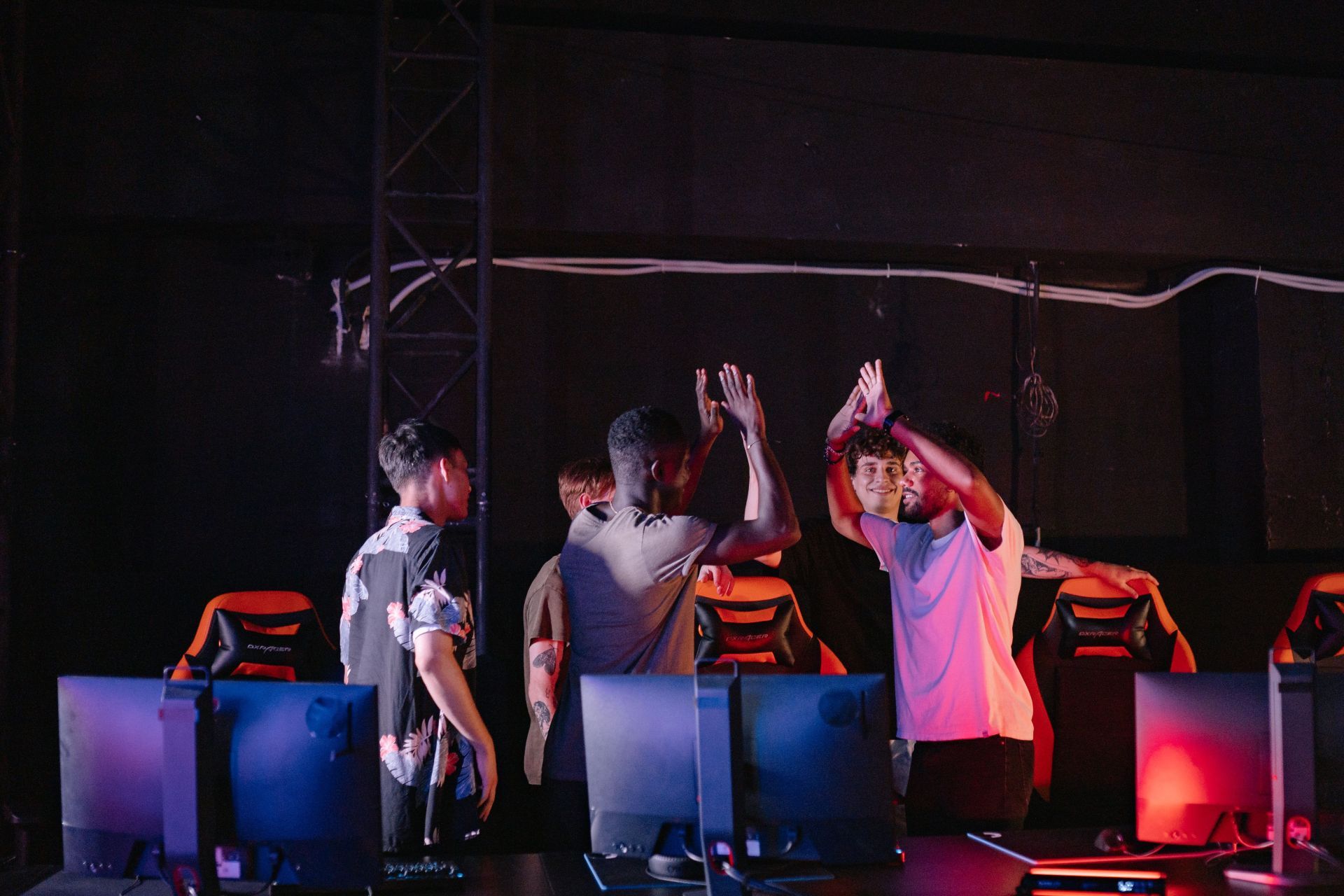



Gaming influencer marketing has changed from “pay a streamer to say the name” to building brand presence inside the entertainment itself - live, interactive, and shaped by community norms.
That shift matters because gaming isn’t a small niche. Newzoo’s Global Games Market Report 2025 estimates $188.8B in 2025 game revenues and 3.6B players.
What makes gaming influencer marketing different from regular influencer marketing
A streamer isn’t just a distribution channel. They run a live show with a community that reacts in real time. That creates three practical differences for brands:
First, the “content” is a moving environment. A good integration fits what’s happening on screen, not a static script.
Second, viewers are used to participating. Your campaign can turn into something people do together, not only something they watch.
Third, trust is highly tied to tone. A creator can make the same product feel honest or forced based on how it’s introduced.
This is why video game influencer marketing tends to reward formats that add entertainment value instead of interrupting it.
The creator ecosystem brands actually buy in gaming
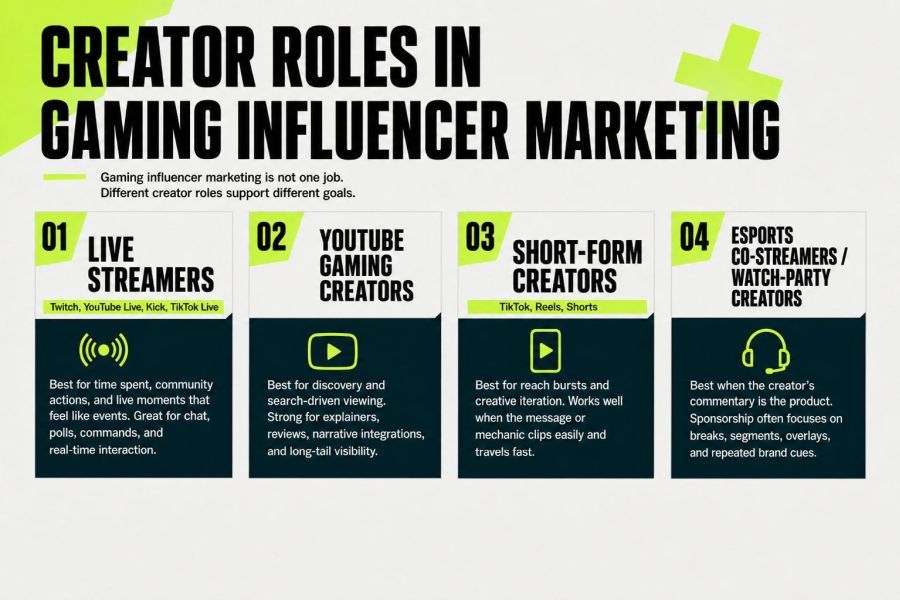
Influencer marketing in gaming is not one job. You’re usually choosing between a few creator roles:
Live streamers (Twitch, YouTube Live, Kick, TikTok Live)Best for time spent, community actions (chat, polls, commands), and “live moments” that feel like events.
YouTube gaming creatorsBest for discovery and search-driven viewing. Great when you need an explainer, review-style narrative, or long-tail visibility.
Short-form creators (TikTok, Reels, Shorts)Best for reach bursts and creative iteration. Works when you have a simple message or mechanic that clips well.
Esports co-streamers / watch-party creatorsBest when the creator’s commentary is the product. Sponsorship often centers on breaks, segments, overlays, and repeated brand cues.
The best gaming influencer marketing plans usually don’t pick one format - they pick one primary format (often live) and then repurpose into one secondary format (often short-form) that keeps the message circulating after the stream ends.
6 collaboration models that work with streamers and creators
Gaming influencer marketing works best when you decide what the audience will experience (not only what the creator will say). These are the models that brand teams can plan and measure:
1) Sponsored segment that fits the stream’s rhythm
A tight segment works when it’s placed at a natural transition: start-of-stream, a queue moment, or a break. The brand wins when the creator can explain it in their own words without awkward phrasing.
2) Stream overlay sponsorship (persistent but light)
Overlays can deliver high frequency without forcing the creator to repeat the same line. The key is simplicity: one visual idea, readable in one second.
3) Co-stream / watch-party sponsorship
For esports or major live events, this is often the cleanest creator-led format. You sponsor the commentary layer, not the official broadcast, and the creator makes the experience feel personal.
4) Creator-led challenge with proof on-screen
This is the “do it live” approach: the creator attempts something, shows results, and lets chat react. It works when the product has a clear demonstration moment.
5) Post-stream content pack (clips + short-form)
Brands often treat this as optional, but it’s where you get extra mileage from the same production. Build it into the plan: 5–10 clips, plus 3–6 short-form edits, with clear usage rights.
How to brief streamers without killing authenticity
Most creator campaigns fail in the brief, not in the creator’s performance. In gaming influencer marketing, a useful brief does three things:
1) It defines the single message. What is the one sentence you want the audience to remember? Keep it human and concrete.
2) It defines the “must keep” vs “must avoid.” Must keep: brand name pronunciation, offer details, safety claims that must be accurate. Must avoid: lines that sound like ad copy or remove the creator’s normal tone.
3) It gives the creator a mechanic, not only a script. Instead of “say these points,” offer an idea the creator can play with: a challenge, a quick test, a chat prompt, a timed moment.
If you need consistency across many creators, give them a menu of options (two ways to introduce, two ways to close) rather than forcing identical wording.
Measurement in gaming influencer marketing
Clicks can matter, but they’re not the whole picture - especially for live streams. A practical measurement stack for influencer marketing in gaming includes:
Delivery: reach / views, unique viewers, and (for live) average watch time.Engagement: chat actions, votes, clicks, code use, follows/subs during the activation window.Outcome: landing-page actions, store visits, sign-ups, sales (when applicable).Brand impact: ad recall, awareness lift, sentiment (if you run research).
Creator economy spend is growing fast, which is why measurement expectations are getting stricter. IAB’s creator research says U.S. creator ad spend is projected to reach $37B in 2025, with strong year-over-year growth noted in the report coverage.
A real example: turning the “ad break” into the entertainment
A good way to understand modern gaming influencer marketing is to look at campaigns where the brand becomes a community activity.
In the Cheetos Chepard Game case study, the activation ran as a “virtual pet” mechanic across 220 streams at once, generating 50k+ interactions and 3.2M campaign views, with reported lifts such as +11 pp brand awareness and 11+ pp ad recall.
You don’t need to copy the exact format to borrow the lesson - the campaign worked because it gave viewers something to do together, and it made the brand part of the stream experience.