



In-game advertising is no longer a niche add-on to media plans. It’s become a structured channel with its own formats, creative rules, and measurement standards—especially as gaming expands across mobile, PC, and connected ecosystems.
This guide breaks down advertising in video games into the formats that actually exist in-market, strategy choices that protect player experience, and brand activation approaches that can move beyond “logo placement” into memorable value.
What actually is in-game advertising (and what it isn’t)
In-game advertising refers to ad experiences delivered inside a game environment or game session—ranging from intrinsic/native placements (ads embedded in the world) to rewarded video and interactive units commonly used in mobile games.
What it isn’t? A single format with a single benchmark. The reason results can vary wildly is that an “in-game ad” might be a billboard in a racing game, a rewarded clip between levels, an audio spot during gameplay, or a playable mini-experience. The IAB explicitly treats gaming as a multi-format environment and published dedicated creative guidelines to standardize quality and protect player experience.
The main in-game ad formats (with typical use cases)
Different formats work because they match different moments in gameplay. Below is the practical taxonomy most teams need.
1) Intrinsic/native in-game ads (embedded placements)
Intrinsic (sometimes called native in-game or in-play) ads are placements that appear inside the game world—like digital billboards, stadium signage, posters, screens, or other environment surfaces designed to feel natural to the scene. The IAB’s gaming creative guidelines define intrinsic/native ads as placements that are “in the game,” integrated as a seamless part of the gameplay environment.
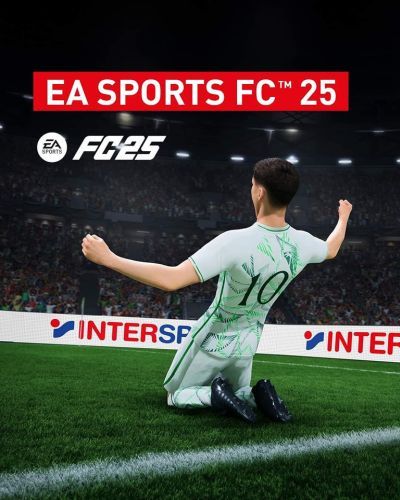
Source: Intersport Poland Facebook
This format is best for brand awareness and premium context because it preserves immersion when executed properly. Measurement is also more standardized than it used to be thanks to dedicated guidelines (more on that later).
2) Audio ads (in-game, non-visual)
Audio ads deliver brand messaging without forcing a visual interruption—often used in contexts where players are already in motion (sports, racing, open-world traversal). The IAB includes audio ads as a core in-game format covered by its creative best practices.
Audio can be effective when the game loop supports it, but it’s sensitive: volume, frequency, and clear “exit” behaviors matter for player control and comfort.
3) Interactive overlays (layered experiences)
Overlays sit on top of gameplay or appear as a controlled interstitial layer. They can support richer messaging, clear calls-to-action, and interactions—if they’re placed at natural breaks or designed to minimize disruption.
4) Rich media and playable ads (high interaction)
Playable ads let users “try” something—often used in mobile ecosystems as a performance/consideration format. The IAB groups rich media and playable ads under highly interactive experiences and provides best practices to keep them aligned with the gaming environment and user expectations.
5) Rewarded video (value exchange)
Rewarded video is an opt-in format where the player chooses to watch an ad in exchange for an in-game benefit (e.g., extra life, currency, speed-up). It’s common in mobile games because it aligns with a “value exchange” logic—players retain control, and brands get high completion probability when implemented well.
Be careful with “stats” here: a lot of rewarded-video numbers floating online are vendor-specific. If you use benchmarks, make sure they come from an auditable primary source or a clearly attributed industry report.
Choosing the right format: a simple strategy map
Most gaming marketing teams choose formats backwards: they start with what’s easiest to buy programmatically and then try to make the creative work. Better is to start with the brand objective and the gameplay moment.
Awareness and positive association
Intrinsic/native and audio tend to be strongest when your goal is association at scale without breaking immersion. This is where context-fit matters most: a premium brand in a gritty survival game can feel “off,” even if the placement is technically viewable.
Consideration and product understanding
Overlays, rich media, and some interactive units work best when you need to communicate why the product matters (features, benefits, new proposition). Here, the risk is friction: if it feels like a forced interruption, the brand pays the price in sentiment.
Performance and measurable action
Rewarded and certain interactive formats can support performance goals, but only when the call-to-action is realistic for the device and situation. “Click to buy now” in the middle of fast gameplay is rarely the best user experience.
Creative best practices that prevent “brand backlash”
In-game ads fail for predictable reasons: intrusive timing, unclear exits, disruptive audio, and creatives that ignore the game’s tone. The IAB Creative Guidelines and Best Practices in Advertising in Gaming were built specifically to reduce inconsistent and intrusive implementations that detract from player experience.
Here are the principles that consistently protect outcomes:
Design for immersion first, message second
If the ad looks like it belongs in the world, players tolerate it—and sometimes enjoy it. If it looks like an alien UI element, it becomes “spam,” even when the brand is strong.
Make user control non-negotiable
Clear “close,” consistent behavior, and predictable sound are not details; they’re trust signals. The IAB guideline objective explicitly includes standardizing ad displays, ad exits, and audio across devices to enhance player experience.
Keep accessibility in mind
Games are used by diverse audiences, and accessibility considerations apply to ads too.
Measurement: what “good” looks like in in-game ads
One reason brands hesitate on in-game ads is measurement inconsistency. Intrinsic/native inventory, in particular, historically suffered from fuzzy definitions of an impression.
What to align on before you launch
If you’re running intrinsic/native in-game placements, make sure you can answer these before buying:
- What counts as an impression (and under what visibility conditions)?
- How is viewability determined in a 3D environment?
- How do you treat occlusion (objects blocking the placement)?
- What invalid traffic / fraud protections exist for the supply path?
Brand activations in games: moving beyond “placements”
“Brand activation” in games is most effective when it delivers value that fits the game loop or the community behavior around it. Even when you’re using standard ad formats, you can build an activation layer on top.
Activation approach 1: world-fit storytelling
Instead of swapping creatives weekly, build a coherent narrative that evolves across placements. Intrinsic environments work well here because the world itself becomes the storytelling canvas—especially in sports, racing, and open-world settings.
Activation approach 2: value exchange done right
Rewarded formats are already a form of value exchange; the activation is to make the reward feel meaningful and fair. If the reward is stingy or the ad frequency becomes oppressive, both retention and brand perception suffer.
Activation approach 3: creator + in-game combo
A common mistake is to run creator activity and in-game placements as separate silos. When they connect, the creator content becomes the “why,” and the in-game exposure becomes the “reinforcement.” The result is more coherence and higher recall—without needing to overload the ad itself.
Risks and guardrails (brand safety, suitability, and sentiment)
In-game environments can be premium—but they can also be unpredictable (UGC, open chats, modded contexts). Treat “brand safety” as more than just avoiding extreme content; focus on brand suitability, meaning the tone and context match your brand values and audience expectations.
Sources
- IAB — Creative Guidelines and Best Practices in Advertising in Gaming — industry guidance on ad formats in gaming and best practices for immersion, exits, audio, accessibility, and consistency.
- Media Rating Council (MRC) + IAB + IAB Tech Lab — Intrinsic In-Game Advertising Measurement Guidelines 2.0 — measurement framework for intrinsic/native ads appearing within gameplay.