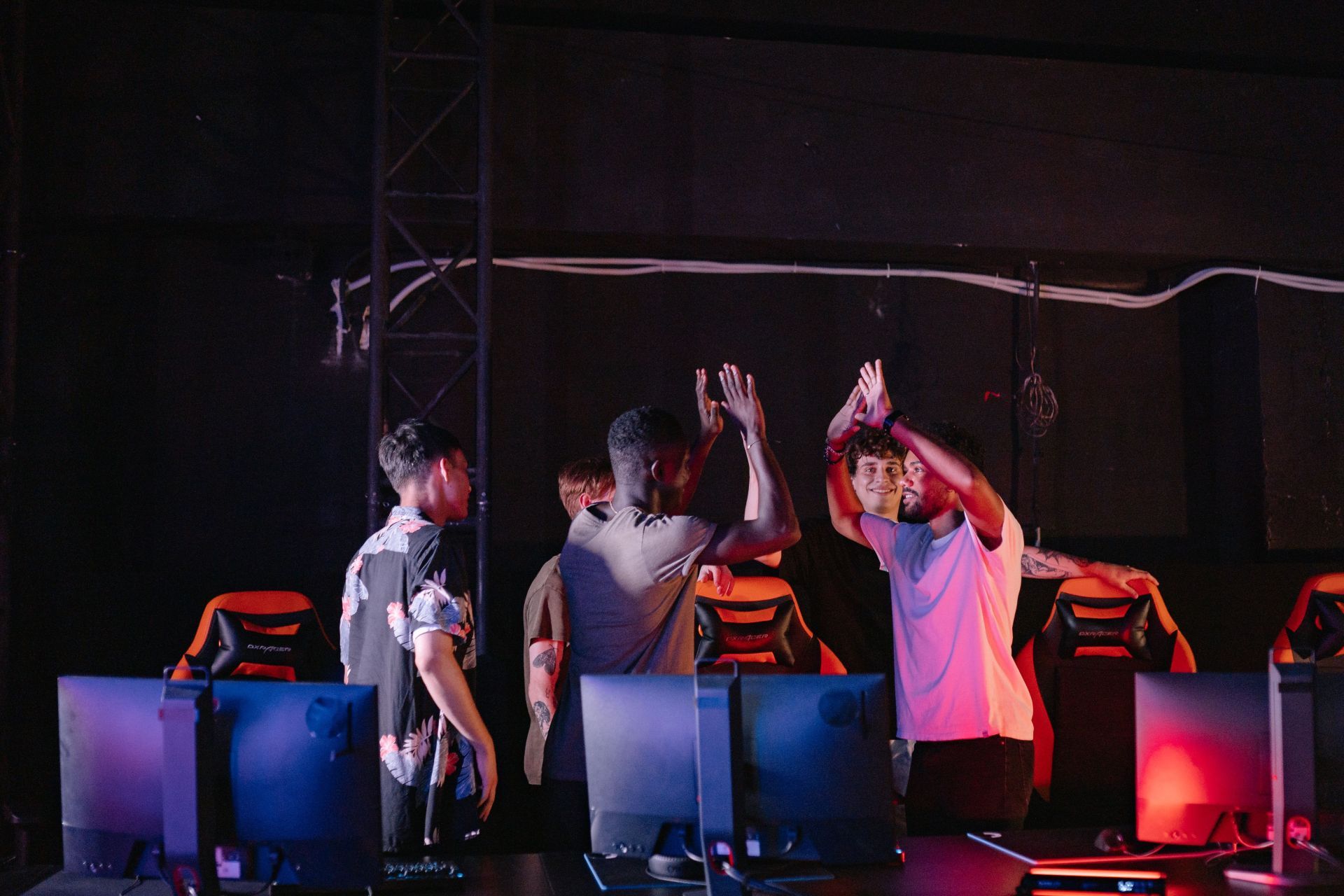



Gaming marketing is no longer a niche curiosity — it has become one of the most effective ways to reach truly engaged audiences. Unlike social media or traditional video, gaming provides a context where attention is not fragmented.
Players don’t scroll or multitask — they are in a state of active focus. In practice, this means that brands can build more than just momentary interest — as long as they show up in the right way.
Gaming as an Ecosystem – Not Just a Channel
Treating gaming as a single media channel can lead to misguided media decisions. In reality, it’s a complex ecosystem made up of games, livestreams, esports, Discord communities, gaming-related social platforms, modding, and the entire culture that emerges between these touchpoints.
Audiences participate not only by playing but also by watching streamers, engaging in community discussions, or researching games and hardware. That’s why effective brand presence requires integration with culture — not just with the medium itself.
Why Does Gaming Guarantee Attention?
The marketing industry today largely believes that ads can’t hold attention for more than a few seconds. But data from McKinsey and Dentsu reports show that gaming works differently.
The average gaming session lasts from 30 minutes to several hours, and 73% of that time is spent in a state of high concentration. The player doesn’t multitask and is in a “lean-forward” mode — their attention is not accidental but intentional. In practice, this allows brands to create far deeper connections than on social media, where individual content pieces compete for 1–3 seconds of attention.
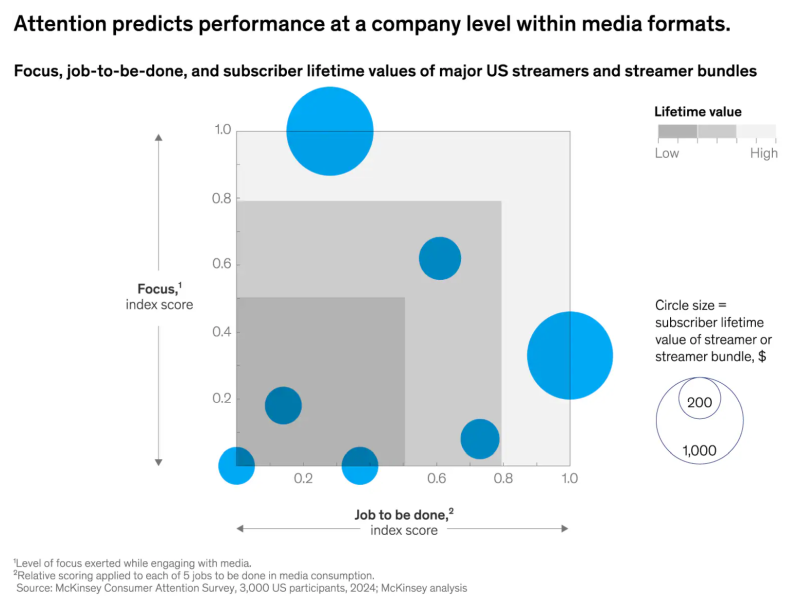
Source: McKinsey - “The Attention Equation Winning The Right Battles for Consumer Attention”
Lower or distracted attention translates into lower user value, while media that demand strong focus - like gaming or livestreaming — generate significantly higher lifetime value. The chart shows that focus and job-to-be-done are key predictors of marketing effectiveness, confirming the rising importance of high-quality attention in building brand results.
Why Does Gaming Marketing Work? Attention as Currency
Marketers increasingly talk about an attention crisis. Users scroll, use ad blockers, and avoid intrusive messages. In the attention economy, the goal is not just to reach — but to hold attention. And that’s easiest to achieve where audiences are already naturally engaged.
The Attention Crisis in Traditional Media
Social media requires a "hook" in the first few seconds, as users expect instant gratification. TV doesn't guarantee focus either: according to GWI research, 86% of internet users use another device while watching TV, and many ads never receive direct visual attention. In both cases, brands compete with massive information noise, and users have little motivation to engage with a message that interrupts them.
The result is a market where viewability and attention are increasingly disconnected. An ad that appears on screen is not the same as an ad that is processed and remembered. For brands measuring success by impressions or reach, this gap stays invisible until it shows up in campaign results.
Gaming as a Space for Quality Attention
In gaming, brand interactions don't have to be forced. Users engage with messages when they're placed in moments where focus is already high.
According to Dentsu's Gaming & Advertising Attention research, brand recall in livestream environments reaches 57%, compared to a Dentsu norm of 38% across media environments. Brand choice uplift in livestreaming hits +17%, against a norm of 7.25% in standard campaigns. These aren't marginal improvements. They reflect a structural difference in how audiences in gaming contexts receive and process brand messages.
The Role of Context: Why Timing Is Everything
According to biometric research by IAS and Neuro-Insight, contextually relevant ads are up to 40% more memorable. In gaming, context includes both the moment within gameplay and the stream narrative. Reactive technologies that analyze stream audio or visuals can trigger brand content at precisely the right point. The brand doesn't interrupt the experience. It appears when the viewer is already fully focused.
The difference matters more than it might seem. A brand that interrupts a tense gaming moment generates resistance. The same brand appearing at a natural pause or as a response to something said on stream becomes part of the content. This distinction between interruption and integration is the most consistent differentiator between campaigns that land and campaigns that don't.
Key Areas of Gaming Marketing
Marketing in gaming works best when it considers multiple touchpoints. Each serves a different role and supports a different stage of the user’s journey with the brand.
Influencer Marketing and Livestreaming
Streamers differ from traditional influencers because they engage their audience in real time, across sessions that often last several hours. Viewers build genuine familiarity with a streamer's personality, reactions, and opinions over time. When a brand message arrives through that relationship, it carries the credibility of the streamer rather than arriving as an external placement. This is structurally different from sponsored YouTube videos or Instagram posts, where the audience already knows the format and adjusts its expectations accordingly.
For brand messages to work in this environment, they need to fit the stream rather than interrupt it. When they do, viewer response shifts from tolerance to active participation. New Game + has access to over 170,000 gaming content creators across its network, which means campaigns can be designed to reach specific audiences at the moments that matter most.
NG+ Campaign Examples:
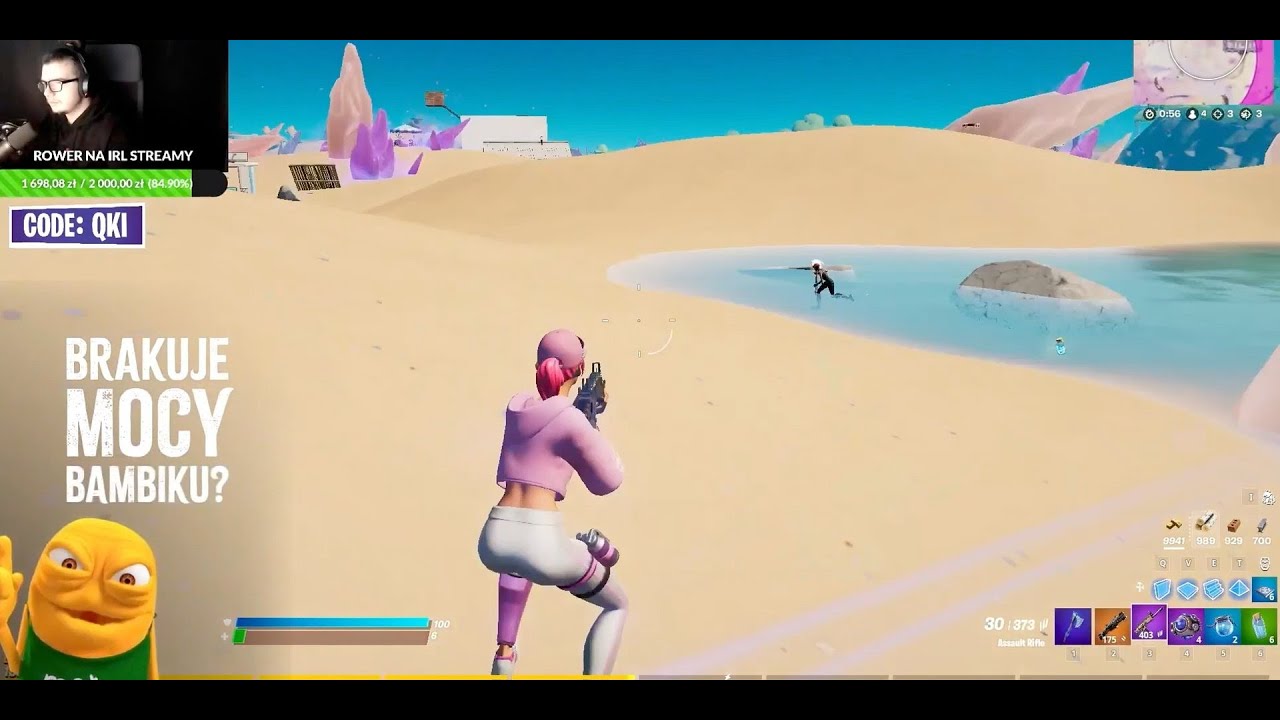
- Danio x Small Hunger – a character responding to the in-game energy level of the player’s avatar, triggered by visual analysis. Viewers perceived it as a natural part of the game, boosting engagement and attention.
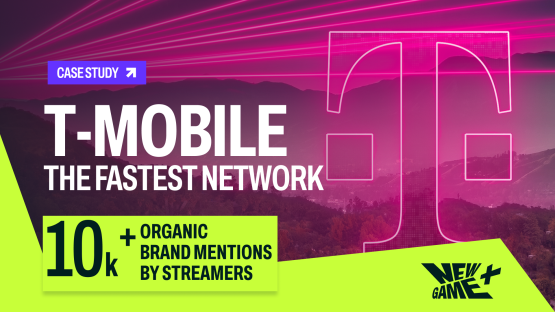
- T-Mobile: The Fastest Network – hundreds of streamers spontaneously triggered branded animations by saying the campaign slogan. Voice recognition matched the message to the conversation, and viewers actively engaged with the campaign.
In-Game Marketing
Brand presence in games doesn't have to be limited to simple placements. Brands can create custom environments, mini-games, quests, or interactive elements visible to players. The critical difference between in-game marketing and a standard digital ad is participation. A player who spends 20 minutes inside a branded Fortnite map has a fundamentally different relationship with that brand than someone who saw a pre-roll.
Custom game environments also generate earned attention that compounds over time. Players return to experiences they find interesting, share them with others, and sessions accumulate without additional media spend. The PKO Bank Polski Fortnite map, built as a fully playable financial education environment, reached 26 minutes of average session time per player across 590,000 map visits.
NG+ Example:
- The Donation Map – Ukraine – a replica of Kyiv’s Independence Square in Fortnite, where players’ time spent in-game generated donations toward rebuilding a health center. Campaign elements were supported by a global activation with streamers from 15 countries.
Communities and Gaming Platforms (Discord, Reddit, Fan Spaces)
Community spaces are where gaming culture is actually made. Discord servers, subreddits, and fan forums are where players discuss strategies, organize events, and form opinions about brands that enter their world. These conversations happen whether or not a brand is present.
Discord functions differently from other social platforms. The format rewards consistent presence over broadcast messaging, which is why brands that participate authentically build familiarity that doesn't come from ad placements. Mountain Dew's creator accelerator program, hosted entirely on a branded Discord server, reached an average of 47 minutes of daily time spent per participant. That figure reflects users choosing to return, not being retargeted.
Purchase decisions in gaming communities follow a specific arc: awareness builds during gameplay or streaming, peer validation happens in community spaces, and the decision to buy or recommend consolidates there. Brands that activate only at the top of this funnel leave the most valuable part of the process to chance.
Contextual Media and Activation Technologies
Contextual activation is one of the fastest-growing areas of gaming marketing. Technologies that analyze stream audio or gameplay footage in real time can trigger branded content at moments that directly match the brand's message to what's happening on screen.
The logic is straightforward but the execution requires precision. A pain relief brand that appears when a streamer complains about fatigue is relevant. The same brand appearing mid-action sequence is noise. New Game +'s Voice Recognition Mechanism monitors stream audio and triggers animations only when specific keywords are spoken, meaning the brand never appears out of context. The result is a message that feels earned rather than placed.
NG+ Example:
- Algoflex Pain Ambassadors – when the streamer mentioned pain or fatigue, a character-ambassador appeared on screen. This created a natural, contextual brand moment and won awards in industry competitions.

Gamification and Interactive Formats
Mechanics of progression, rewards, and participation resonate more strongly than static formats because they change the viewer's relationship with the brand from passive to active. When someone feeds a virtual pet, completes a challenge, or earns points by watching a stream, they are doing something, not just seeing something. That shift from observation to participation produces stronger recall and more positive brand associations.
Interactive formats also tend to extend session time. A viewer engaged in an ongoing challenge has a reason to stay beyond their normal session length, which compounds exposure in a way that repeat impressions alone cannot achieve.
NG+ Example:
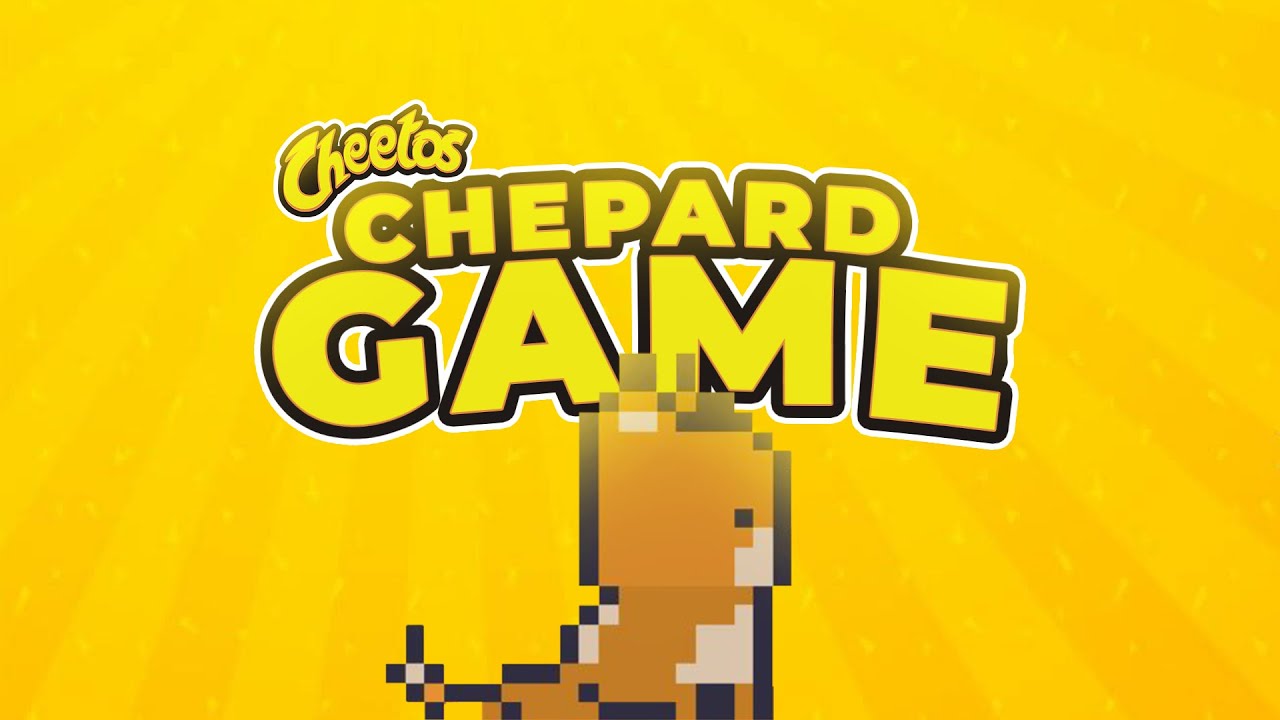
- Cheetos Chepard Game – viewers collectively took care of a virtual pet by controlling it via Twitch chat. The campaign generated over 50,000 interactions and significantly boosted brand awareness metrics.
How Should Brands Approach Gaming in 2025?
Entering the gaming space is not about choosing a media tool — it’s primarily about adopting a communication strategy aligned with the context and behaviors of the audience.
Start with Culture, Not Format
Gaming isn't just a collection of media platforms. It's a culture with its own language, norms, and dynamics. For a campaign to be credible, it must fit the style in which gamers talk, feel emotions, and experience their world.
In practice, this means understanding which games your target audience actually plays, how community conversations happen within those titles, and what role brands typically occupy in that context. A campaign designed for a Fortnite audience will not work for a League of Legends community. The mechanics, tone, and community expectations are different. Brands that apply a single format across all gaming titles tend to find that community reception is indifferent at best.
Starting with culture also means listening before broadcasting. Brands that spend time understanding what audiences already talk about, celebrate, and reject are better positioned to create something that fits rather than intrudes. The hidden rules of gaming culture that kill brand campaigns covers the specific patterns that consistently cause community backlash, most of which are avoidable once you understand the underlying logic.
Shift Focus from Reach to Quality of Engagement
In the attention economy, the key metric is not how many people “see” an ad, but how many actually pay attention to it. Gaming provides a high-quality environment where users are focused and active. That’s why brand lift and memorability matter more than CTR.
Brand Presence Should Enhance the User Experience
The most effective campaigns are those that add something to the situation. Stream viewers enjoy interactive and humorous moments, while gamers value immersion and consistency. When a brand appears at the right moment, it becomes a natural part of the narrative.
Treat Gaming Holistically – as an Ecosystem of Touchpoints
Streams, games, communities, contextual media, and long-term initiatives each contribute something different. Combining them produces results that none achieves alone. Gaming works best when approached as an environment, not a single ad format.
Allegro's gamEXP program demonstrated what this looks like at scale. The campaign combined an Overwolf achievement-tracking app, streamer partnerships, viewer Drops rewards, and a Riot Games partnership, running across League of Legends, Valorant, and Teamfight Tactics simultaneously. Players earned Smart! Coins for in-game achievements. Viewers earned rewards for watching. Streamers became genuine ambassadors rather than paid placements. The result was +12pp top of mind, +29pp ad recall, and +16pp brand perception, alongside nearly 200 million views. No single activation produced those numbers. The ecosystem did.
For brands looking to build this kind of integrated gaming presence, Gaming 360 Marketing: Building Integrated Brand Ecosystems in Gaming outlines the framework New Game + uses to approach this systematically.
Summary: Gaming as a Strategic Attention Space
Gaming is one of the few spaces where audiences are truly engaged. It provides a context that improves memorability, strengthens brand relationships, and boosts communication effectiveness. But to be effective, brand activity must be integrated with culture, matched to context, and powered by tools that appear at the right moment.
A well-designed presence in gaming is not an add-on to a strategy — it becomes its most effective component.
Sources:
- McKinsey – The Attention Equation: Winning the Right Battles for Consumer Attention 2025 – an analysis of consumer attention quality, including the “attention quotient” and “commercial quotient”.
- Integral Ad Science (IAS) – The Context Effect – a study showing the impact of contextual ad alignment on memorability and user response.
- Dentsu – Attention Economy 2024 – a report on measuring attention in advertising: “Viewable does not equal viewed”, with research from the MENA region.