



Gaming culture, once considered marginal just a decade ago, is now central to the lives of young people. Generations Z and Alpha are growing up in a world where digital entertainment has become an essential part of daily life, social interaction, and self-expression. So who are today’s gamers, and what drives their decisions in the gaming world?

Games as Identity and Community
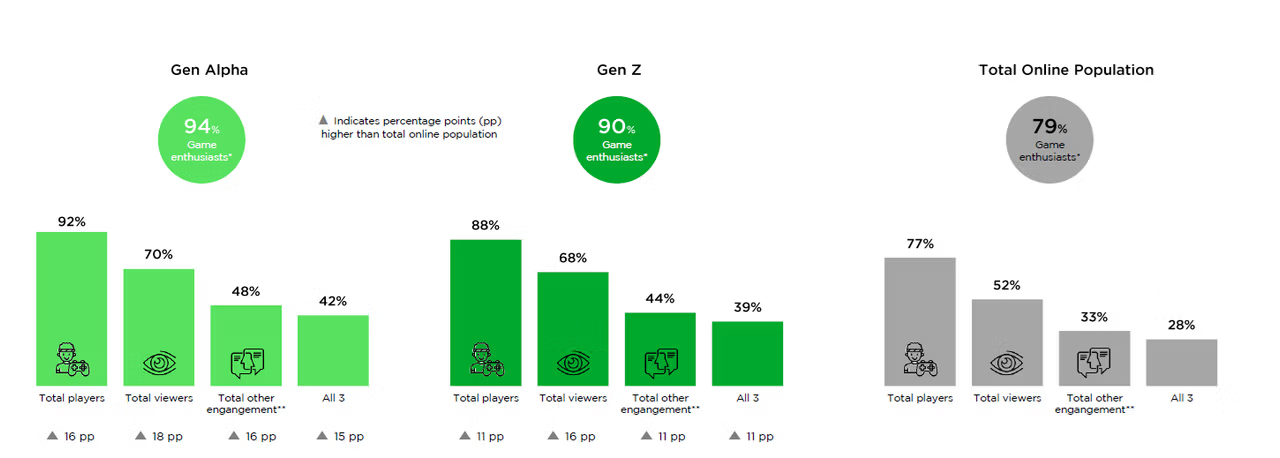
For Gen Z and Gen Alpha, gaming is not just a way to spend free time — it is a foundation of their identity. According to studies, as many as 90% of individuals in these generations identify as gamers, treating games as a natural space to build relationships and express themselves. It is in virtual worlds that they create alter egos, personalize avatars, and explore their identities. Platforms like Roblox and Fortnite, for example, are not just places to play — they are environments where young people build communities based on cooperation and shared values.
Motivations and Mechanics That Engage Gamers
The motivations behind gaming are deeply rooted in the desire for social interaction and exploration. As many as 85% of young gamers say that games help them meet new people, and 40% of Gen Z spend more time socializing online than offline. Multiplayer games are crucial in this context — they not only enable collaboration but also help develop social skills. Among the youngest players (Gen Alpha), the most valued games are those that offer expansive worlds to explore and cooperative problem-solving mechanics.
Source: https://www.blog.udonis.co/mobile-marketing/mobile-games/gen-alpha-gen-z-gamers
Technology and Devices – How They Play
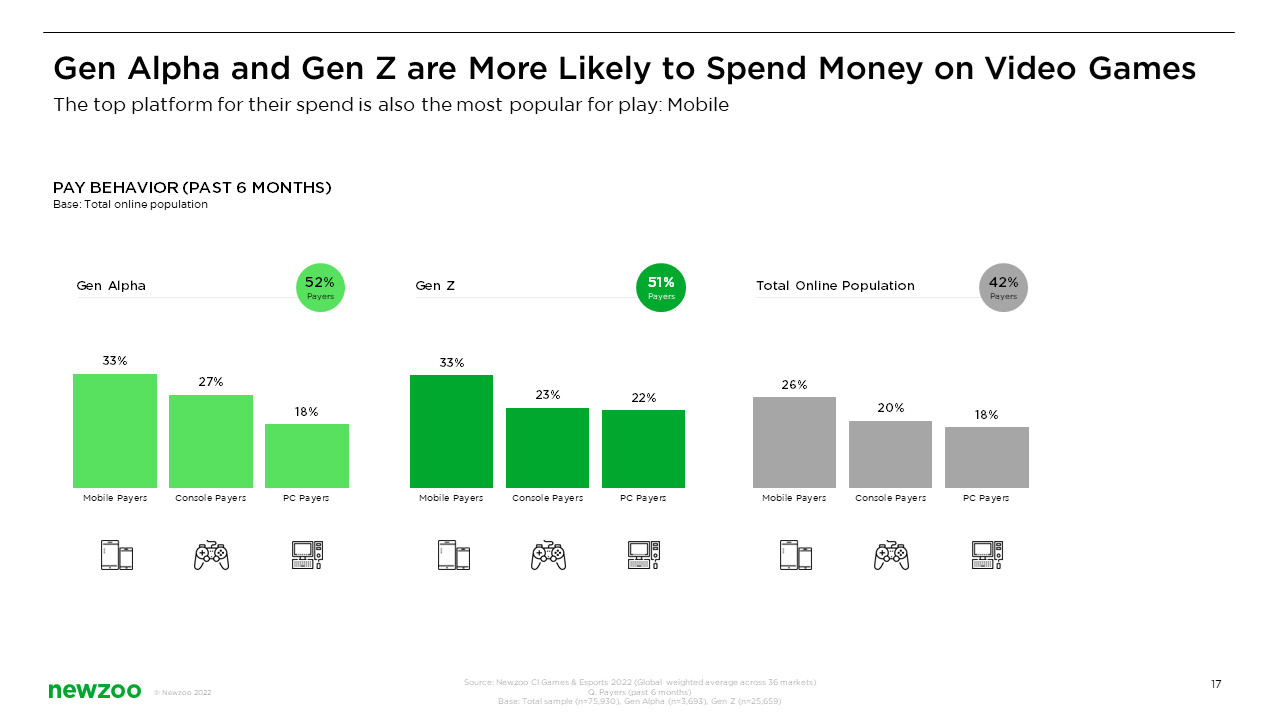
Gen Z prefers mobility. As many as 64% of gamers choose mobile devices, appreciating the ability to play anywhere. Gen Alpha is even more invested in cross-play, expecting seamless game continuity across different platforms. At the same time, technologies such as AR and VR are gaining popularity. For 62% of young gamers, these represent the future of the gaming industry, demonstrating that immersion is a key factor in capturing and holding their attention.
Spending and the Microtransaction Economy
Source: https://newzoo.com/resources/trend-reports/gen-alpha-gen-z-the-future-of-gaming-free-report
Microtransactions are a norm for today’s gamers. Over half of Gen Z and Gen Alpha regularly make in-game purchases — most often items used for avatar personalization or character development. Young players see these purchases as a way to stand out and gain higher status within the gaming community, which highlights the social nature of their engagement.
Mental Health, Wellbeing, and Challenges
The pandemic and associated isolation have changed how younger generations perceive gaming. Games have become a form of escapism and a tool for coping with stress. The popularity of “cozy games” like Animal Crossing highlights the importance of relaxation and emotional regeneration. However, this engagement also brings the risk of digital addiction. Gen Z, in particular, needs education and support to maintain a healthy balance between digital and real-world life.
Recommendations for Gaming Marketers
Understanding the psychographics of young gamers allows for the design of campaigns that not only capture but also sustain their attention. Effective communication should tap into the social aspects of gaming and the potential for self-expression. Campaigns should consider mobility, tech trends (such as VR/AR), and wellbeing-related themes. Engaging formats that fit naturally into gaming culture — like interactive contextual ads or online community events — are key to authentically reaching both generations of players.
Psychographic analysis offers a broader perspective than demographics alone, showing just how deeply gaming is embedded in the mindset of today’s youth. Understanding these insights is crucial for effective marketing in a world where attention is earned through genuine engagement.