



Gaming marketing 360 isn’t a standard industry term, but the idea behind it is very real: brands win in gaming when they build an ecosystem, not a one-off activation. That means combining paid media, creators, esports, community, and in-game placements into one coherent system - where every touchpoint reinforces the next.
This article shows how to design a gaming 360 marketing approach that feels native to gaming culture, creates compounding reach, and stays measurable without flattening everything into vanity metrics.
What “Gaming 360 Marketing” means in practice
Gaming 360 marketing is an integrated strategy where a brand shows up across the gaming journey in consistent, mutually reinforcing ways:
- Discovery (where people first hear about you): creators, esports moments, gaming media, paid social.
- Validation (where people decide if you belong): creator trust, community response, cultural fit.
- Experience (where they interact with the brand): in-game placements, activations, events, challenges.
- Retention (where you keep relevance): recurring content formats, community programs, seasonal beats.
The point isn’t to be everywhere but to build a connected set of touchpoints so the brand presence feels continuous instead of random.
Why brands need an ecosystem, not a single campaign
A single gaming campaign can generate a spike. An ecosystem builds a habit: “this brand shows up here in a way that makes sense.” That difference matters because gaming is culturally sensitive - players and communities quickly detect when a brand is only visiting for impressions.
If you’re treating gaming as a channel, you’ll optimize for reach. If you’re treating it as an ecosystem, you’ll optimize for fit, consistency, and repeatability.
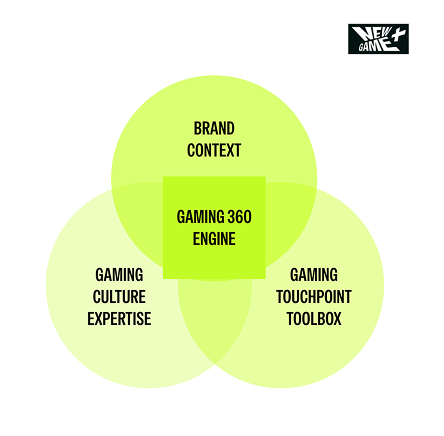
The core building blocks of a 360 gaming ecosystem
A useful way to plan is to treat your ecosystem as five interconnected layers. You can run all five, but you don’t need to launch them all at once.
1) Creator layer
Creators are usually the fastest path to credibility, because they combine distribution with trust. In a 360 model, creators aren’t an “add-on” - they’re often the narrative engine.
What “360” changes here is how you brief and structure: instead of one sponsored post, you build repeatable creator formats that can be repurposed into paid social, community content, and even in-game creative cues.
2) Esports layer
Esports partnerships work well when you need structured, calendar-driven moments: matches, tournaments, recurring storylines. In a 360 approach, esports becomes your “tentpole” layer - the big moments you can build around.
The ecosystem move is to connect esports to other layers: creator commentary formats, community watch parties, and paid media bursts that amplify the best moments rather than generic brand assets.
3) In-game layer
In-game presence can range from intrinsic/native placements to interactive formats. The crucial rule in a 360 system is that in-game is rarely the first touch - it’s the reinforcement touch, the thing that deepens memory once the brand is already validated elsewhere.
A practical guardrail: lean on established best-practice standards to protect player experience and avoid disruptive implementations.
4) Community layer
Community is where 360 strategies compound. A brand that invests in community creates a flywheel: creators feed community; community feeds UGC; UGC feeds paid; paid feeds discovery; discovery feeds creators.
This layer doesn’t need to be complicated to work. It needs:
- a clear community benefit (utility, fun, status, access),
- predictable cadence (weekly/monthly),
- and moderation rules that protect the tone.
5) Owned and paid layer
Owned channels (brand social, landing pages, CRM) and paid media are the “glue.” In a 360 approach, paid isn’t there to replace cultural fit. It’s there to scale what already resonates.
The simplest rule: pay to amplify the content that communities already reward—don’t pay to force content that doesn’t fit.