



A 28-year-old man spends four hours a night on ranked League of Legends matches, tracking his climb toward Diamond. Another 28-year-old man plays two rounds of a mobile puzzle game on the train and never opens it again until his next commute. A third hasn't picked up a controller in a year but watches three hours of Twitch every evening. Same age. Same gender. Same line in most marketing briefs: "male, 25 to 34, gamer." Three completely different people, three completely different responses to almost any campaign a brand could run.
This is the problem with targeting gamers the way brands target everyone else. Age and gender describe a population. They don't describe a person's relationship with games, and that relationship, not the birth year attached to it, is what actually predicts whether a campaign lands or gets ignored.
Age and gender tell you almost nothing about a gamer
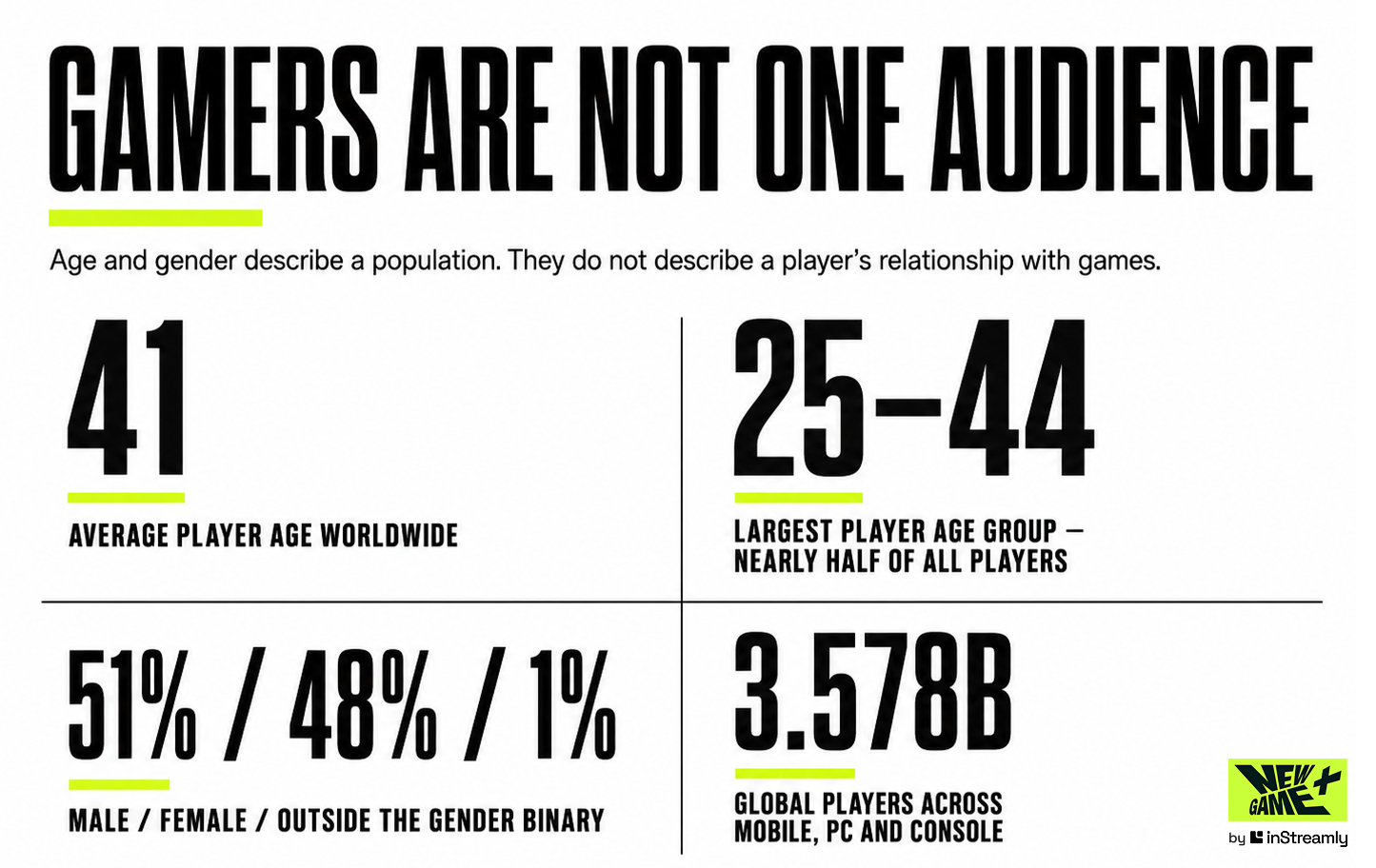
The stereotype driving most gaming briefs is a teenage boy with a controller. The data doesn't support it. According to ESA's Global Video Games Report 2025, the average age of a player worldwide is 41, and the largest single age group is 25 to 44, accounting for nearly half of all players. Gender is close to even too: 51% of players are male, 48% female, and 1% identify outside that binary.
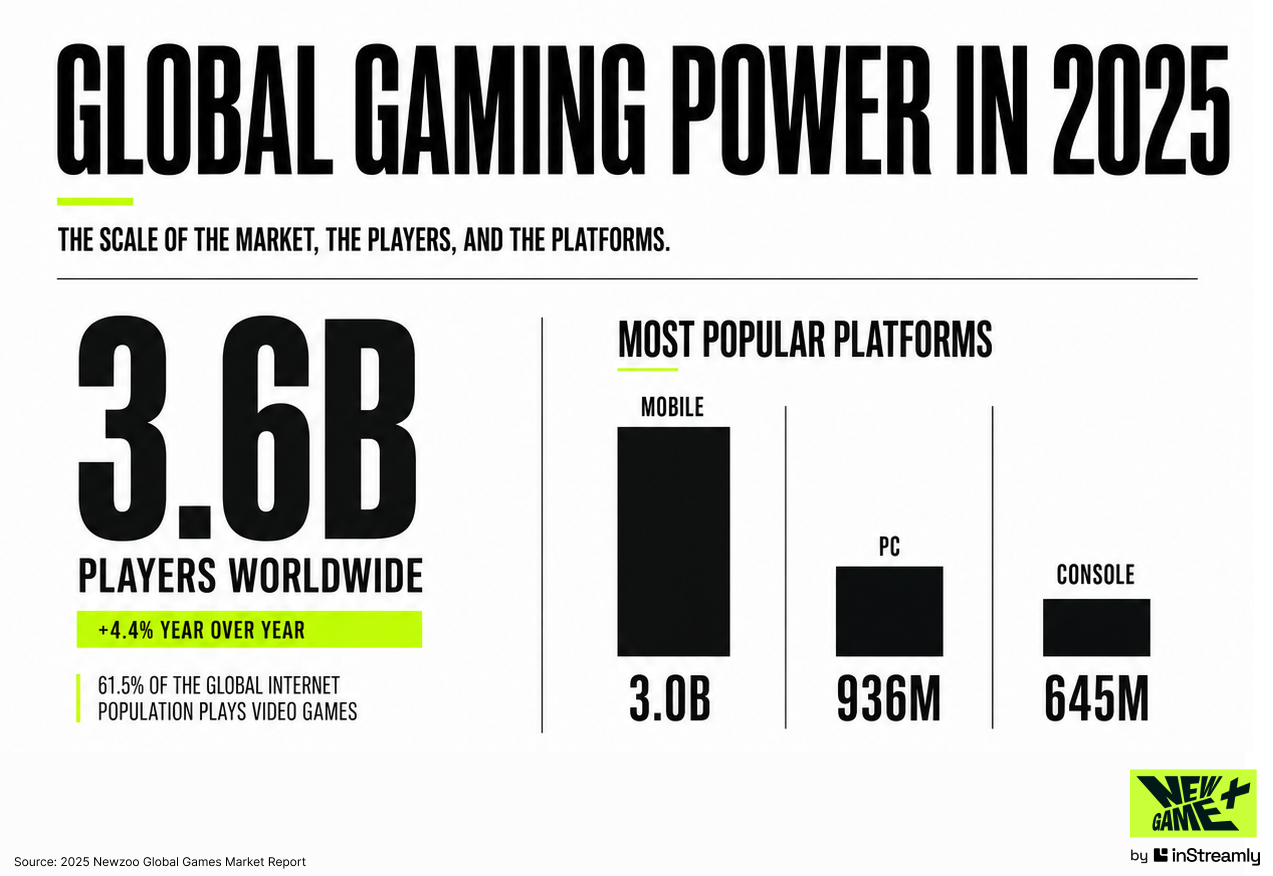
Scale makes the problem worse, not better. Newzoo's 2025 Global Games Market Report puts the global player base at 3.578 billion people, split across mobile, PC and console. When "gamer" describes over three and a half billion people spanning every age bracket and a near-even gender split, a brief that says "target male gamers 18 to 34" isn't a targeting strategy. It's a description of a large chunk of the internet.
What is Gamer DNA, really?
Gamer DNA is a way of describing a player by behavior and motivation instead of demographics. It asks what someone actually does when they play, why they keep coming back, and how they spend money and time around games, rather than how old they are or what their gender is on a form.
The reason this matters for a marketing brief is simple: behavior predicts response to a campaign. Demographics don't. A brand that understands whether its target gamer is competitive or social, a spender or a free-to-play purist, a player or a viewer, can build a campaign around that reality instead of guessing.
What do the five dimensions actually measure?
A useful Gamer DNA profile answers five separate questions, and a gamer can score differently on each one.
How they play. Competitive or casual. Someone climbing a ranked ladder and someone playing a match to unwind after work are using the same game for opposite reasons.
Why they play. This is the motivation layer, and it has the deepest research behind it. Quantic Foundry's Gamer Motivation Model, built on survey data from hundreds of thousands of players, groups player motivation into six pairs across three clusters: Action-Social (destruction, competition, excitement, community), Mastery-Achievement (challenge, completion, strategy, power) and Immersion-Creativity (fantasy, story, design, discovery). A player scoring high on competition and low on story wants a completely different experience, and a completely different brand message, than one scoring the reverse.
Where and what they play. Platform and genre. A mobile puzzle player and a PC strategy player rarely overlap, even if they're the same age.
How they consume gaming content. Some people only play. Some only watch streams and never touch a controller. Many do both, but the ratio matters for whether a campaign should live inside gameplay, inside a stream, or both.
How they spend. Free-to-play only, occasional purchases, or consistent high spenders. This dimension alone often separates a gamer worth a media budget from one who isn't.
Behavioral data beats panel research in a fragmented market
Panel research asks people to describe themselves. Behavioral data watches what they actually do, and in a fragmented ecosystem where a League of Legends player has no overlap with a Roblox player, watching behavior is the only approach that scales.
The useful signals come from four places:
- Past campaign performance across similar segments
- Platform-level data on how a specific audience plays and spends
- Community signals, like chat behavior and creator following patterns
- Streaming behavior itself, which shows what content a segment actually watches rather than what it claims to watch in a survey
New Game + campaigns generate this kind of data directly. Chat activity, verified clicks and watched hours across a campaign reveal which specific audience responded, at a resolution no demographic panel could match.
This is also why a Gamer DNA profile gets more accurate over time rather than starting from zero with every brief. A brand that has run one gaming campaign already has behavioral data on how its actual segment responded. The second campaign should use it instead of re-guessing.
How does the same brand's segment change the campaign?
Two New Game + campaigns show how differently this plays out depending on the segment a brand is actually targeting.
Allegro's gamEXP campaign targeted a narrow, high-intensity segment: players of League of Legends, Valorant and Teamfight Tactics, built on an official Riot Games partnership. These are players scoring high on competition and achievement, the kind of gamer who tracks their own stats without being asked. The mechanic fit that motivation exactly. Players earned rewards for completing in-game challenges they were already trying to complete, tracked automatically through an Overwolf app. The campaign generated close to 95,000 completed challenges and a 29 percentage point lift in ad recall, because the reward system matched what that specific segment already wanted to do.
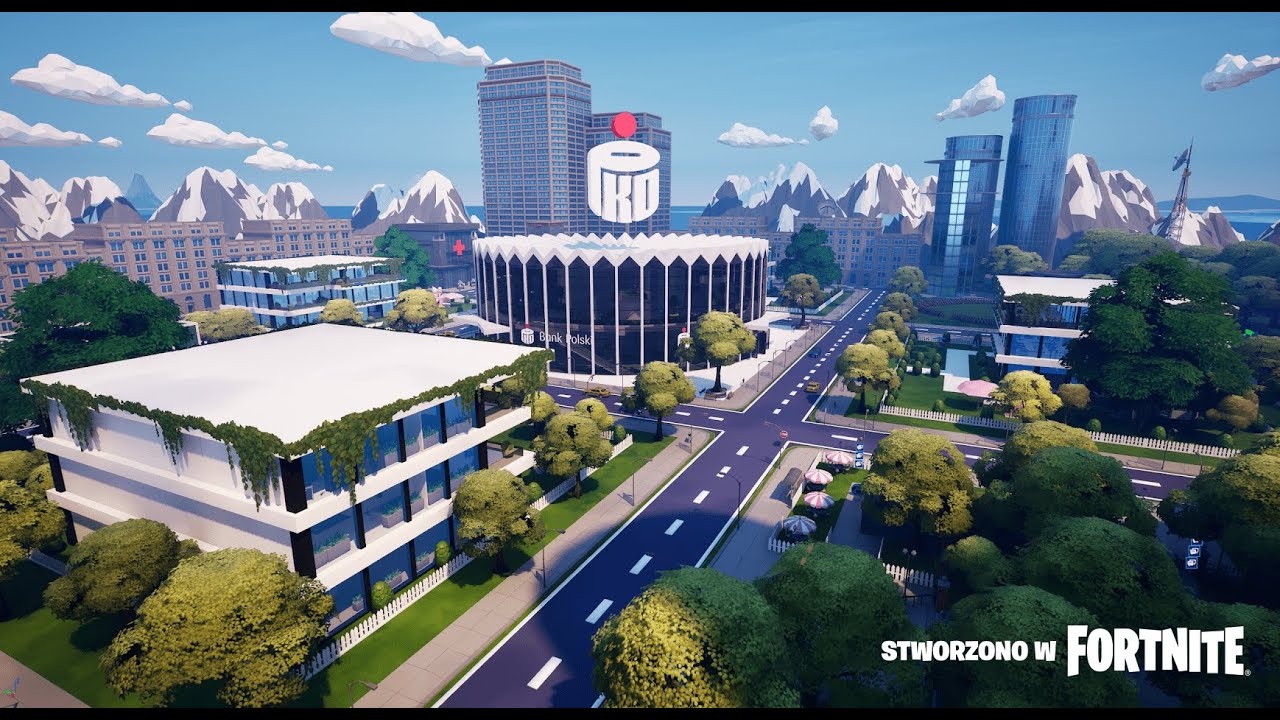
PKO Bank Polski's Fortnite branch targeted something much broader: a Gen Z audience inside one of the most casual, exploratory platforms in gaming. The custom map let players manage plots, run small in-game businesses and complete side quests, appealing to creativity and discovery rather than competition. The result was 26 minutes of average playtime per player and 590,000 map views, proof that a broad segment can still deliver a deep response when the format matches what that segment is actually motivated by.
Same overarching goal for both brands: reach a younger audience through gaming. Completely different execution, because the gamer segment behind each brief wasn't the same.
Start with the brand's identity, not the gamer's profile
Here's the part most briefs skip: the gamer segment shouldn't come first. The brand's own identity should.
A brand built around competition and being the best has no business targeting a social, achievement-indifferent segment, and the reverse is just as true. Before choosing a platform, a game or a creator, a brand needs to answer what it wants to represent in gaming, and only then match that identity to the gamer segment it's actually compatible with. This is different from asking "which gamers should we reach." It's asking "who are we, and which gamers would actually believe it."
This reordering also explains why a targeted campaign doesn't always look narrow from the outside. A campaign can execute broadly, reaching a wide audience across a mass platform, and still be precisely targeted underneath, because the team behind it understood exactly which motivations that broad audience shares. The PKO Bank Fortnite map looked, on the surface, like a mass-reach play inside a mainstream platform. Underneath, it was built around a specific and deliberate bet: that a Gen Z audience motivated by discovery and creativity would rather learn financial basics by running a virtual business than by reading a leaflet. The targeting was precise. It just didn't need to be narrow to work.
Marketing to gamers works best when a brand thinks in terms of context and motivation rather than reach alone, which is exactly what separates a campaign that happens to work from one built to.
Build your brand's Gamer DNA brief
Before choosing a game, platform or creator, answer these questions in order:
- What does our brand want to represent in gaming, and what tone fits that identity?
- Which of the five dimensions matters most for this specific campaign goal: play style, motivation, platform, consumption mode or spend?
- Does our brand's identity match a competitive, achievement-driven segment or a social, casual one, and are we picking games and creators that segment actually spends time with?
- Are we choosing a platform because it's famous, or because our specific gamer segment genuinely lives there?
- What behavioral data exists from past campaigns, platform reporting or community signals that can validate this segment before launch, rather than a demographic panel that can't?
Use this as a checklist before signing off on any gaming brief:
- Brand identity and gaming tone defined before any platform is chosen
- Target segment described by motivation and behavior, not age or gender
- Platform and format matched to that segment's actual habits
- Past campaign or community data used to validate the segment
- Creator and format choices checked against the segment's consumption habits, not just reach
A brand that can answer all five isn't guessing about who it's reaching. It's building toward a specific, testable segment that behavioral data can actually confirm.
For a deeper look at how gaming audiences break down by generation and psychographic profile, see New Game +'s guide to the modern gamer.
The takeaway for marketers
Age and gender were never good proxies for gaming audiences. They were just the easiest boxes to check on a media plan. Gamer DNA replaces those boxes with play style, motivation, platform habits, consumption behavior and spend, the five things that actually predict whether a campaign will land.
Key takeaways:
- Demographics describe a population; behavior and motivation describe a person, and only the second one predicts campaign response.
- A useful gamer profile scores five dimensions separately: how someone plays, why they play, where and what they play, how they consume gaming content, and how they spend.
- Define the brand's own identity in gaming before choosing a gamer segment. Match comes from compatibility, not reach.
- A campaign can look broad in execution and still be precisely targeted underneath, if the team understood the segment's motivation before building it.