



A brand tracking study can show strong recognition scores and a stalled sales line in the same quarter, and the marketing team still can't agree on what to fix. That confusion is not a research problem, but a definitions problem.
Brand awareness, brand affinity, and brand loyalty get used interchangeably in briefs and boardrooms, but they measure three different relationships between a person and a brand. Each one responds to a different kind of campaign. Confuse them and the result is expensive: media budgets poured into reach when the real gap is emotional connection, loyalty programs launched before anyone actually likes the brand, or a campaign judged a failure because it moved affinity when the KPI was set for awareness.
This article defines each metric precisely, shows how they connect in sequence, and explains why live streaming has become one of the fastest ways to move the metric in the middle: affinity.
What does brand awareness actually measure?
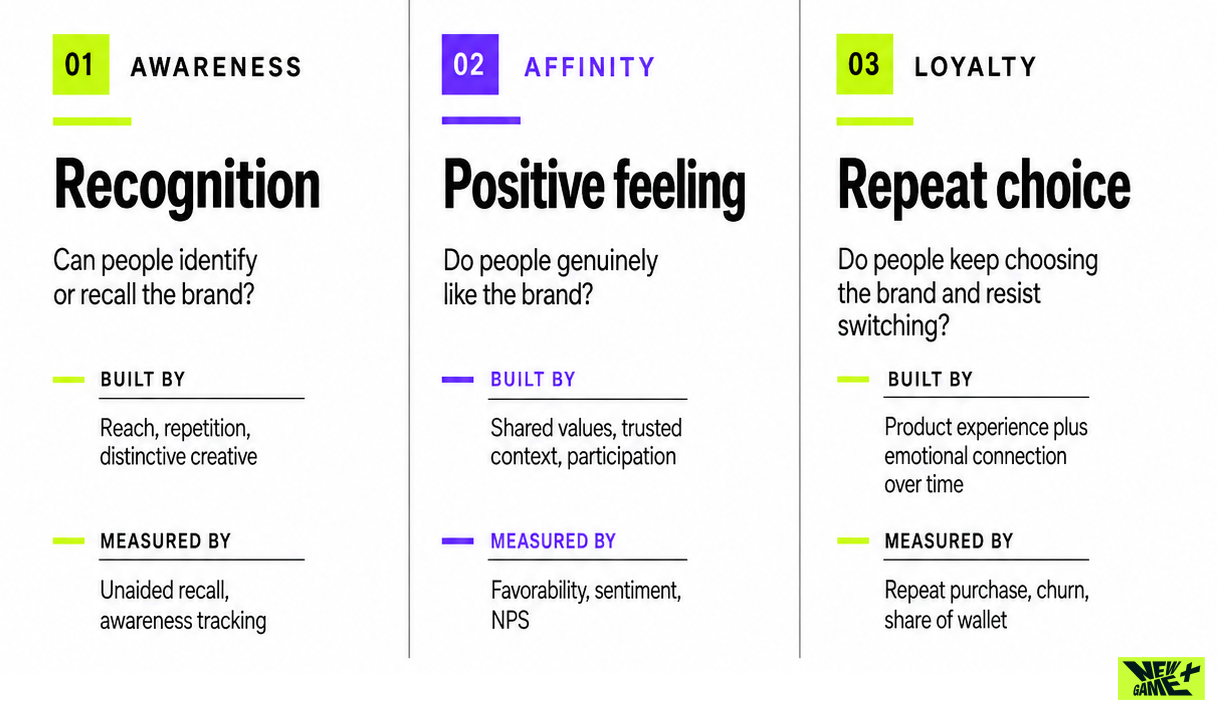
Brand awareness measures recognition, nothing more. It answers one question: can a person identify the brand when prompted, or recall it unprompted, within a category? A shopper who can name three financial apps when asked has high awareness of whatever made that list. It says nothing about whether they like any of those brands.
Awareness does not measure sentiment. A brand can have near-universal recognition and still lose market share, because recognition alone doesn't move a purchase decision once several recognized brands are competing for the same slot. Awareness is built through reach, repetition, and distinctive creative that makes a brand identifiable at a glance, before any message has been processed.
The practical trap is treating awareness as the finish line. A brand with high recognition and weak consideration doesn't have a reach problem. It has a perception problem, and no amount of additional impressions fixes that. That's the point where teams need to look at affinity instead.
What actually builds brand affinity?
Brand affinity measures something awareness can't touch: whether a person feels genuinely positive about a brand, independent of whether they've bought anything from it yet. It's the gap between "I know this brand" and "I like this brand."
Affinity is built through shared values, participation in something the person already cares about, and experiences that reinforce their own identity rather than interrupt it. This is why affinity is harder to buy than awareness. You can't reach your way into it. It has to be earned inside a context the audience already trusts.
Gaming communities are unusually good at building this kind of trust, and live streaming is the sharpest version of it. A viewer's relationship with a streamer is parasocial but real: they've spent hours watching this person's reactions, judgment, and personality. When a brand shows up inside that relationship, live, it inherits a slice of the trust the viewer already has for the streamer. A pre-recorded ad can't do that, because there's no relationship for it to borrow from.
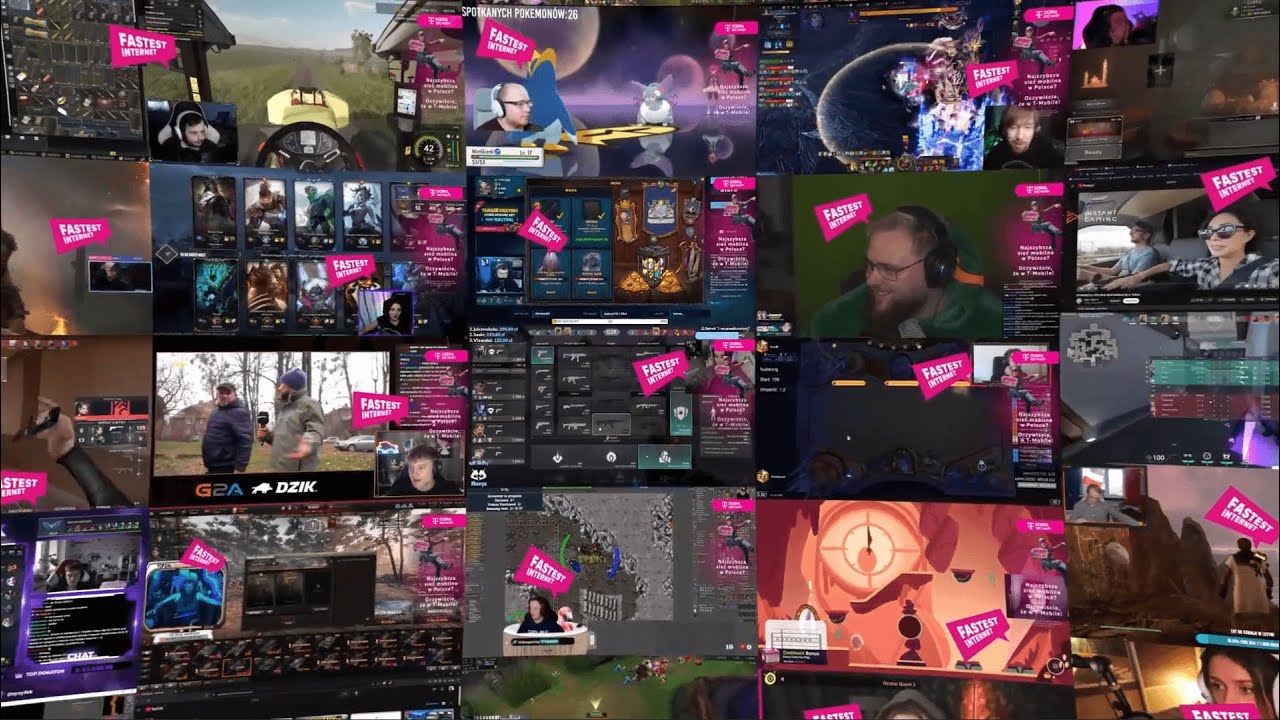
T-Mobile's Fastest Network campaign is a clean example of this mechanism at work. A voice recognition system triggered on-screen animations every time a streamer naturally said the phrase "Fastest Network," live, on their own stream. No scripts, no forced reads. The phrase got spoken more than 10,000 times organically, and the campaign moved brand affinity by 16 percentage points. Viewers started asking streamers to say the phrase themselves, which is the opposite of ad avoidance.
Does affinity always turn into loyalty?
Not automatically. Brand loyalty measures repeat purchase intent, resistance to switching when a competitor undercuts on price, and willingness to recommend the brand to someone else. It's a behavioral commitment, not a feeling.
Loyalty is built through a consistent product experience reinforced by emotional connection over time. This is where the affinity-to-loyalty link matters. Loyalty without affinity is fragile and price-dependent. A customer with no emotional attachment stays only as long as the deal stays competitive, and switches the moment a cheaper option appears. Loyalty built on top of real affinity survives that pressure, because the switch now costs the customer something beyond money.
The common trap is sequencing this backward. A brand rolls out a loyalty program, points and all, before anyone has a reason to feel good about the brand in the first place. That produces short-term transaction behavior, not durable relationships. Mountain Dew's Dew It Anyway campaign shows the right order. The brand built a creator support program first, a Discord server with workshops and real career tools for aspiring streamers, and let affinity grow inside a community that had a genuine reason to value the brand. Participants spent 47 minutes a day inside that space on average. Affinity moved 28% among 16 to 24 year olds, and the brand's sales value in that age group grew 33% in the same period. Loyalty followed affinity. It wasn't asked to do the work alone.
Where do these three metrics sit in the consumer journey?
The three metrics aren't competing definitions of the same thing. They sit in sequence:
- Awareness - the brand gets recognized
- Familiarity - repeated exposure makes the brand feel known
- Consideration - the brand earns a place among options the person would actually pick from
- Affinity - the person forms a genuine positive feeling about the brand
- Loyalty - the person chooses the brand repeatedly and resists switching
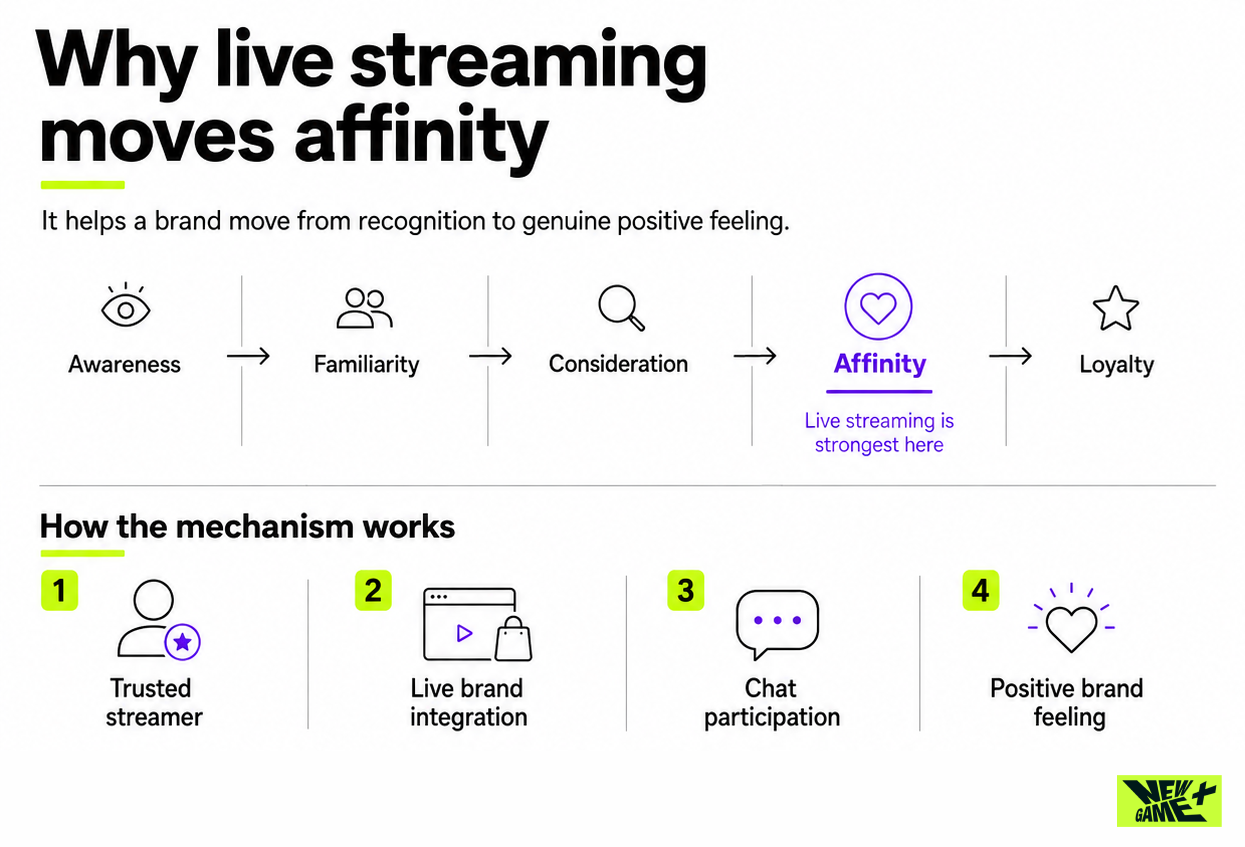
Each stage needs a different kind of input to move forward, which is exactly why a single campaign format rarely does all the work.
Live streaming is most effective specifically at the affinity layer, moving a brand from "I know this" to "I genuinely like this." That's a narrower job than most campaign briefs assume, but it's also a harder one to fake, which is why it matters when a format can actually do it.
The mechanism is chat, not just screen time. When a viewer watches their favorite streamer get supported by a brand live, in front of the whole chat, they form a positive first impression before doing any research on the brand at all. That impression forms faster and holds up better than one built through a static ad, because it happens inside a social context the viewer already trusts, with the streamer's own reaction as an implicit endorsement.
The practical implication for planning: know where your brand currently sits before choosing a campaign format. A brand with weak recognition needs reach first, not a community activation. A brand with strong recognition and flat sentiment needs exactly the kind of contextual, trust-borrowed exposure live streaming provides. Using the wrong tool for the current gap is the most common reason gaming campaigns get judged as underperforming when they actually did what they were built to do, just not what the brand needed at that moment.
Which metric should you actually prioritize?
Start by diagnosing where the gap actually is, not by defaulting to whichever metric is easiest to move.
How to measure each one:
- Brand awareness: unaided recall surveys, category-level awareness tracking studies run before and after a campaign
- Brand affinity: brand favorability surveys, social sentiment analysis, Net Promoter Score used as a directional proxy
- Brand loyalty: repeat purchase data, churn rate over time, share of wallet against competing brands
A short diagnostic before choosing a campaign:
- If recognition is low across the category, the brand needs reach and distinctive creative before anything else
- If recognition is high but consideration is flat, the gap is emotional, and that's an affinity problem, not a media weight problem
- If affinity is strong but repeat purchase is weak, check whether the product experience itself is holding loyalty back
- If a loyalty program is being considered, confirm affinity exists first. A points system on top of indifference just buys short-term behavior
None of these metrics replace the others, and none of them is the one true measure of brand health. They answer different questions, and a brand's actual problem is usually specific to one of them at a time.
Key takeaways
- Brand awareness measures recognition. Brand affinity measures whether people actually like the brand. Brand loyalty measures whether they keep choosing it. Treating them as interchangeable leads to the wrong campaign every time.
- Affinity has to be earned inside a context the audience already trusts. It can't be bought with reach alone.
- Live streaming moves affinity faster than most formats because it borrows trust from an existing relationship between a streamer and their viewers, in real time, in front of chat.
- Loyalty built on top of real affinity survives competitive pricing pressure. Loyalty built without it is fragile.
- Diagnose the actual gap in the consumer journey before picking a campaign format. The metric you need to move should decide the format, not the other way around.