


There is a version of the gaming UGC conversation that sounds simple: players make content, brands support it, everyone wins. The reality is more complicated and more interesting. The same communities that produce the most valuable player-created content are also the ones most capable of dismantling a brand campaign that gets the relationship wrong.
Working with user-generated content in gaming requires a different mental model than influencer marketing or sponsored social media posts. The content is being built inside game engines, on community-run servers, inside platforms like Roblox and Fortnite Creative. The creator is not posting about a product - they are building an experience that other players enter and spend time inside. The stakes are different. The rules are different.
What UGC in gaming actually means
User-generated content in gaming is not the same as UGC in social media. Social media UGC is reviews, unboxing videos, reaction clips, and brand mentions. Gaming UGC is something structurally different: player-built maps, custom game modes, mods, and entire experiences constructed inside platforms that give creators the tools to build what they want.
According to Bain & Company's Gaming Report 2025, cited by EMARKETER, 46% of gamers say they are spending more time creating in-game content than a year ago. The player is no longer just the audience. In a growing share of gaming time, the player is the production team.
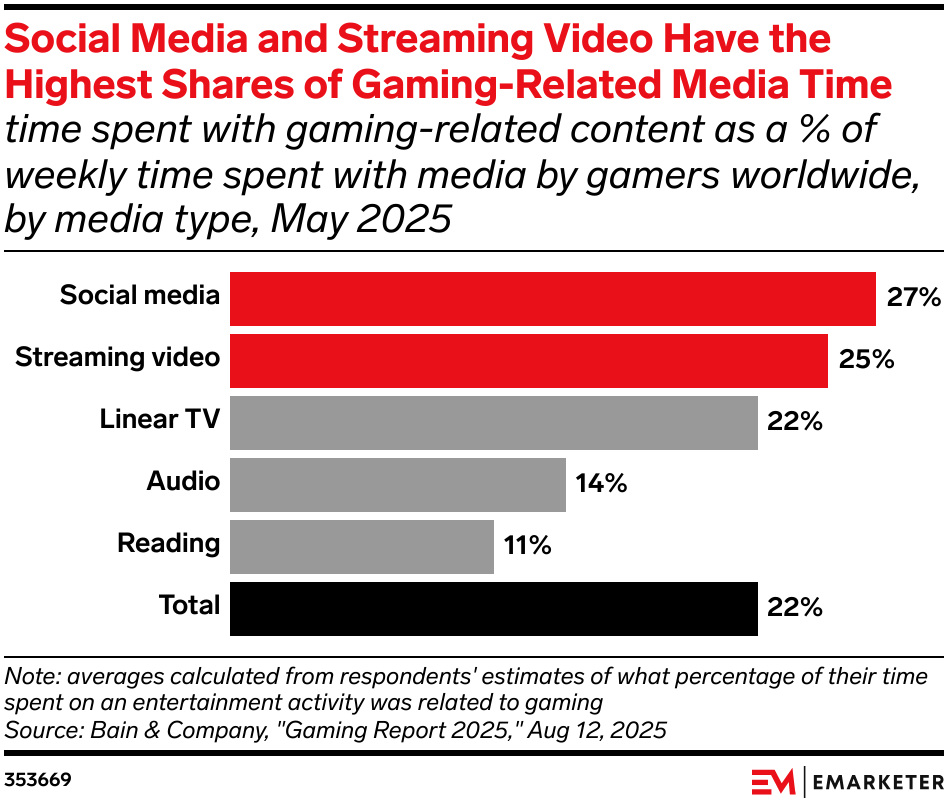
Source: https://www.emarketer.com/topics/category/UGC
The platforms enabling this have grown into significant economic systems. Developer payouts across Roblox, Fortnite Creative, and Overwolf reached approximately $2.2 billion in 2025 - a 47% increase over 2024, according to Naavik's State of UGC Games 2026 report. These are not hobbyist communities. They are professional creator ecosystems where brands have started to spend meaningful money.
Why the scale has changed the calculus
In 2025, brand integrations in Fortnite Creative grew 44% year-over-year. Across all major UGC platforms, integrations (335 tracked activations) surpassed brand-owned worlds (252) for the first time, according to GEEIQ's State of Brands in Virtual Worlds 2026. Brands are no longer building standalone destinations and hoping players show up. They are plugging into existing creator-built communities where engagement is already proven.
That shift reflects something practical. A brand-owned experience in Fortnite Creative requires significant development investment, a discovery strategy, and often months of promotion before meaningful player counts arrive. An integration into an existing popular creator island gives the brand immediate access to an established audience - the creator's players, not the brand's reach.
The implication is that the creator's community comes with the deal. Which means the creator's relationship with that community either validates or undermines everything the brand places inside that experience.
What makes integration harder than it sounds
Creator-built communities have their own standards. They have visual aesthetics they protect. They have in-jokes and rituals that brands are not automatically welcome to participate in. An integration that ignores these norms - a logo placement that breaks the visual language of the experience, a branded mechanic that has no gameplay function, a co-branded item nobody actually wants - signals to the community that the brand bought access without understanding what it was buying into.
The Fortnite licensing dispute of mid-2025 illustrated this tension clearly. When Epic Games cracked down on unlicensed Squid Game content, dozens of creator-built experiences were removed - experiences that had built real audiences over months. Creators were frustrated. Brands watching the situation noted that only 20–30% of advertisers are comfortable with entirely unlicensed use of their IP in UGC spaces, according to GEEIQ CEO Charles Hambro. The tension between brand control and creator freedom is structural, not incidental.
Roblox responded by introducing a formal licensing tool that pays IP holders 15–25% of experience revenue. Fortnite offers creators a 100% revenue split on in-game item sales within their islands. The platforms are formalizing what was previously informal - which helps brands, but also increases the cost of entry and narrows creative freedom for the creators who built the audiences brands want to reach.
Three models that actually work
The most useful way to think about brand participation in UGC gaming is by the degree of creative control the brand retains - and what it gives up in exchange.
The integration model is the fastest and most common. A brand plugs its assets into an existing creator-built experience for a defined period. It requires less investment than building from scratch and gives the brand access to an established audience. NASCAR drove over 50 million new visits in a single month by integrating official cars and liveries into Driving Empire on Roblox, according to GEEIQ's 2025 brand integration data. The brand added content the game's existing players found genuinely useful. The integration earned its place.
The co-creation model gives creators assets and lets them build. The brand gets community-native content - work that sounds and looks like it belongs - because it was made by someone who actually belongs. The tradeoff is creative control. The creator will make choices the brand's approval process wouldn't have approved. Accepting that is the cost of getting content that the community trusts.
The owned world model means building a complete branded experience. It gives the brand the most control over how it appears, what players do, and what the experience communicates. It also requires the most investment and carries the highest risk of building something nobody visits. Brand-owned worlds fell 57% year-on-year in 2025 as brands recognized that an empty destination is harder to build than a presence inside an existing community.
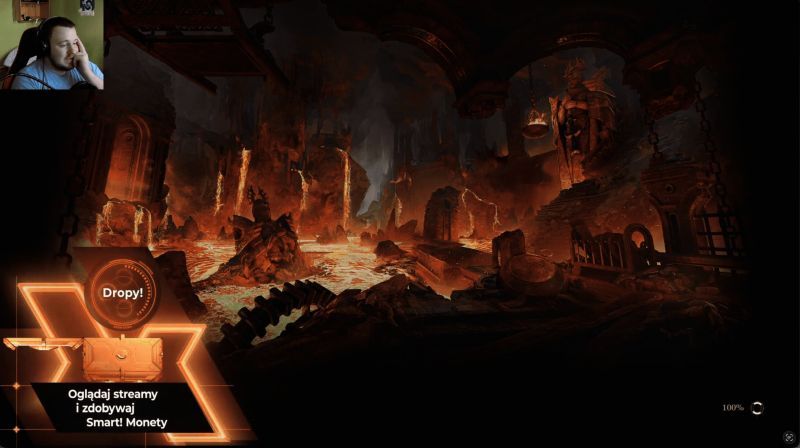
The Allegro gamEXP campaign demonstrates what co-creation done well looks like. Top streamers - Gucio, Nieuczesana - were given the app and used it themselves. Their endorsement wasn't scripted because their experience wasn't scripted. The result: 19,884 active players, 92% positive sentiment, +29pp ad recall. A veteran streamer called it the best viewer-focused activation of his career. That outcome is not available through a media buy.
What control actually means here
The phrase brands most often use when discussing UGC partnerships is "losing control." It is worth being precise about what that means and what it doesn't.
Losing control of brand-safety parameters is not acceptable and does not have to happen. Monitoring tools, content audits, clear creator briefing documents, and defined content rules are all compatible with UGC partnerships. New Game +'s Safety 2.0 infrastructure monitors brand placements in real time across campaigns - brand safety and creative freedom are not mutually exclusive.
Losing control of aesthetic execution is unavoidable and often desirable. Giving a creator a style guide and a set of brand-safety rules, then letting them build within those constraints, produces content that the community trusts precisely because it wasn't made to a corporate template.
Losing control of community reception is a given. The community responds to what it sees, not to what the brand intended. The only variable the brand can influence is whether its presence genuinely earned acceptance - and that question is answered by the quality of what the brand brought to the experience, not by the campaign brief.
The measurement gap
Standard campaign metrics - impressions, reach, CPM - were not designed for what happens inside a UGC experience. They measure exposure, not participation. In a branded Fortnite island or a Roblox integration, the signal that matters is what players actually did and how long they stayed.
Maybelline's integration into Paradise RP on Roblox generated 42 minutes of average engagement from users who redeemed branded virtual items, according to GEEIQ's 2025 data. Time-in-experience, item redemption rates, repeat visits, and community sentiment are the real indicators of whether a brand earned its place in a creator-built world. Most brand measurement frameworks don't yet track them - which means most brands are evaluating UGC gaming campaigns by the wrong signals.
Before entering a UGC space
Five questions that separate campaigns that earn community acceptance from campaigns that don't:
- Does the platform's audience match the brand's target - not just broadly, but in this specific creator's experience? A Roblox integration that reaches the right age group in the wrong game delivers reach without relevance.
- Is the brand entering as a participant or as a sponsor? A participant adds something to the experience. A sponsor adds a logo. The community distinguishes between them immediately.
- Does the brand have enough creative flexibility to let the community make the content their own? Co-created content that gets revised to death in a legal review process loses what made it valuable.
- Is there a brand safety and monitoring plan that doesn't require pre-approving every asset the creator produces? Approval gates that slow the creator's process produce worse content and worse relationships.
- What does success look like in metrics the platform can actually measure? If the answer is reach and impressions, the brand is optimizing for the wrong thing.
Key takeaways for marketers
- UGC gaming is not influencer marketing - it is brands operating inside creative ecosystems that players built and communities that players own
- Integration into existing creator communities has surpassed brand-owned world-building as the dominant approach, because established audiences are more valuable than built-from-scratch ones
- Control in UGC partnerships is narrow: brand safety, yes; creative execution, limited; community reception, none
- The measurement frameworks that matter in UGC gaming measure participation and time-in-experience, not impressions
- Authentic endorsement - like the Allegro case - only happens when the creator's own experience of the brand is genuine