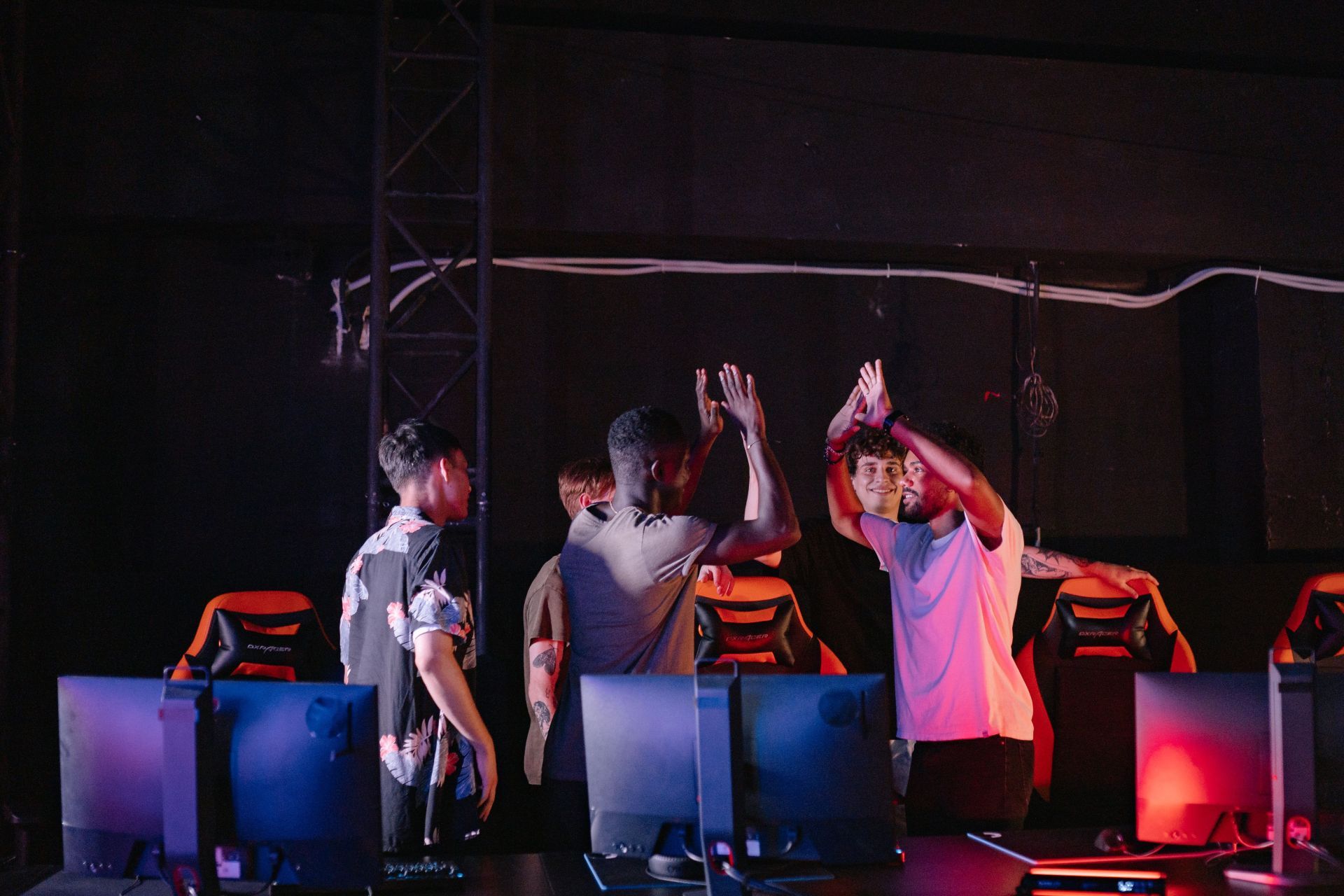



Every gaming marketing brief contains some version of the same sentence: "We want to reach gamers." It sounds like a target group. It isn't. It's a placeholder that describes three fundamentally different people with different attention patterns, different platform behaviors, and different relationships with advertising. A campaign built for one of them will land poorly with the other two - or actively push them away.
But here's the part most gaming briefs get backwards: audience segmentation isn't where strategy starts. It's where it arrives, after you've answered a more basic question about the brand itself.
What kind of brand are you in gaming?
Before any decision about who to reach, there's a prior question: what does this brand stand for, and how does that connect to why people play games?
A brand built around togetherness, shared experience, and social connection maps naturally onto multiplayer games, cooperative moments, and the community layer of gaming. It doesn't fit neatly into a competitive esports tournament, unless that competition is treated with lightness rather than intensity. A brand built around performance, ambition, and being the best fits the competitive layer of gaming directly, and can speak to players who are motivated by ranking up, winning, and testing themselves.
This isn't abstract brand strategy. It shapes every downstream decision: which segment to target, which format to use, which creators to work with, what the campaign actually says.
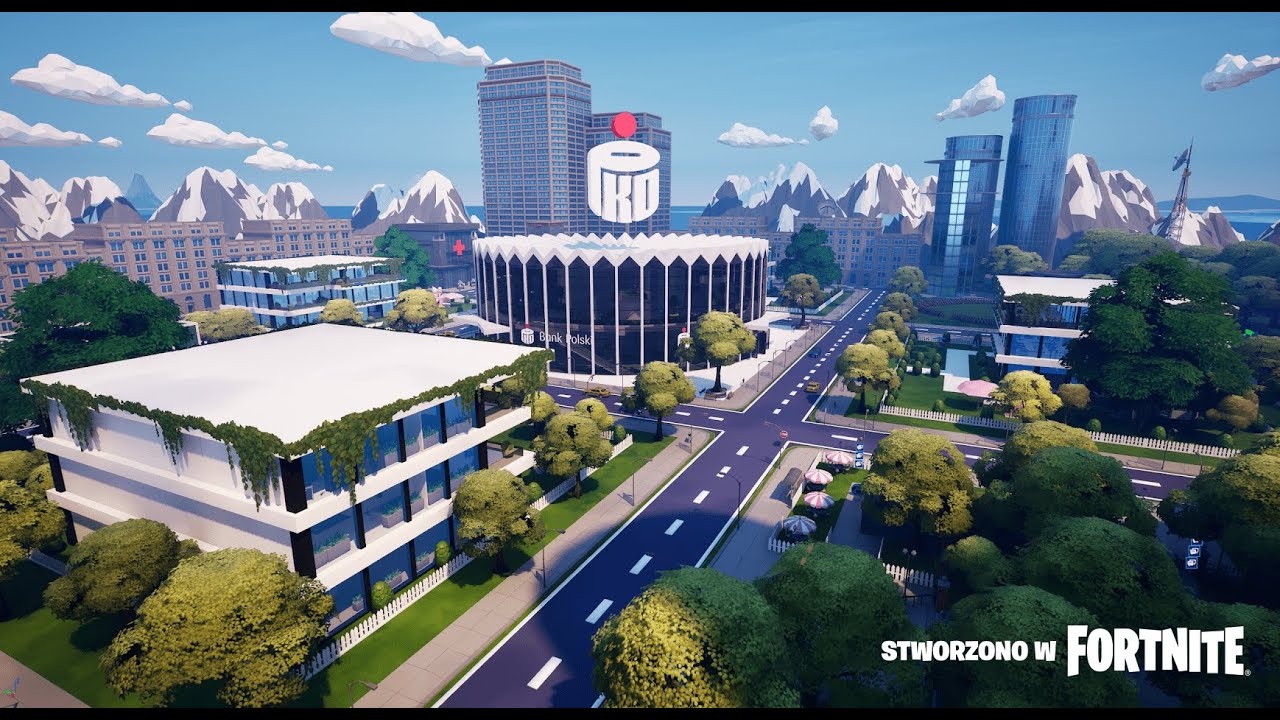
The PKO Bank Polski Fortnite campaign is a clear example. PKO needed to create a genuine brand presence among young players while building a space for financial education. The mode chosen wasn't combat or competition - it was a tycoon map, where players ran businesses and managed resources. The gameplay mechanic matched what the brand was about. The result: 26 minutes of average session time and 590,000 map visits. Fortnite was set as a constraint from the start. The decisions about how to be in Fortnite came from understanding what PKO stood for.
The Allegro gamEXP campaign worked from a different starting point. Allegro is a platform built around choice and accessibility - the idea that you can find anything, and engage on your own terms. The gaming activation reflected this directly: challenges were designed for different playstyles and difficulty levels, and if you didn't want to play at all, you could earn rewards just by watching streams. The brand's value wasn't forced onto gaming. It was expressed through it.
Why most campaigns target core and hardcore gamers - not casual ones
Understanding gamer segments matters, but the reasons why brands end up targeting specific segments aren't always the ones in the brief.
Casual gamers - people for whom gaming is one of several leisure activities, who often play mobile titles opportunistically during commutes or breaks - are reachable through gaming as a media channel. But gaming isn't a strong enough passion point for them to build a campaign around. You can run rewarded video or mobile display against a casual audience and it will work as media. What it won't do is generate the kind of community response, organic sharing, or emotional connection that brands are increasingly looking for when they enter gaming.

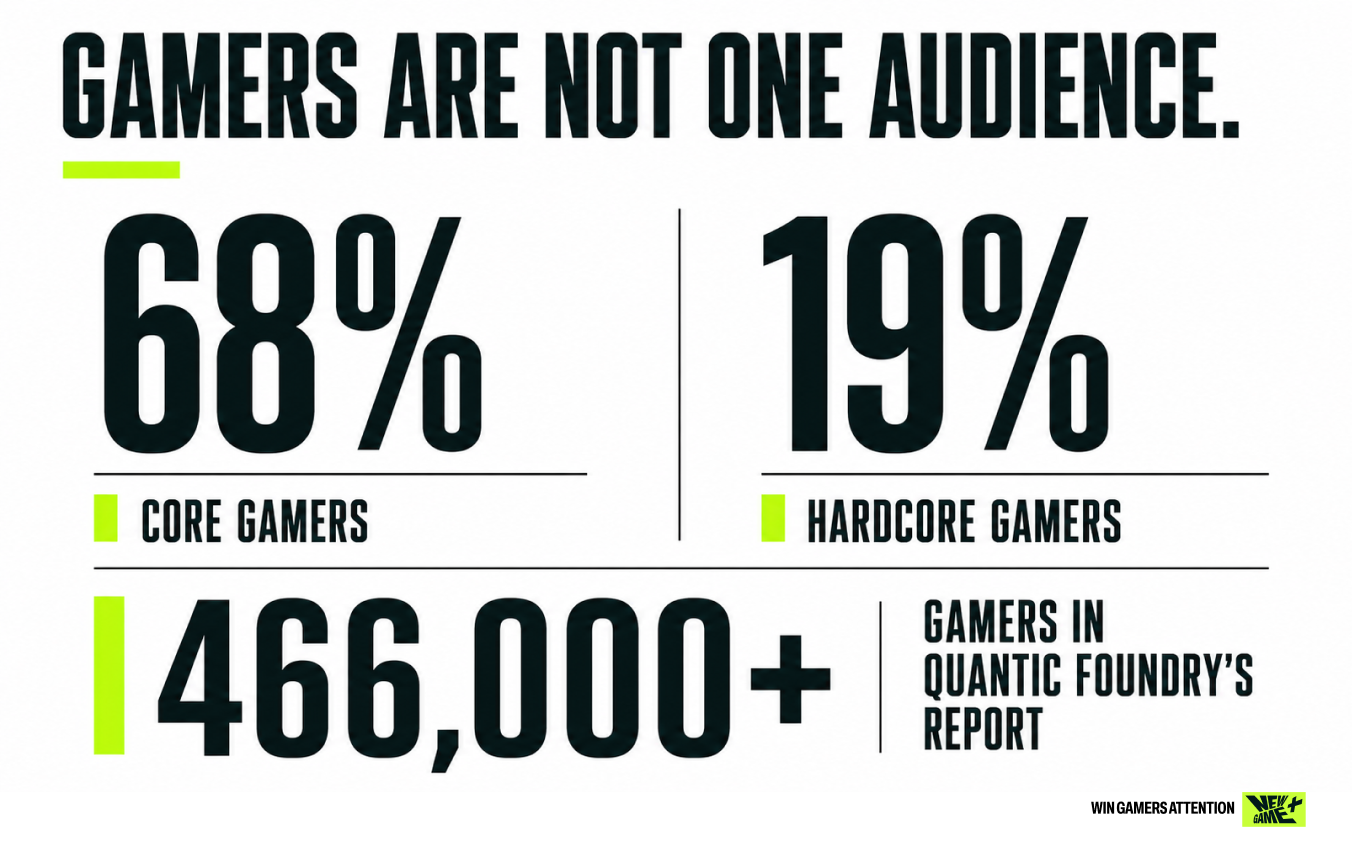
Core gamers are the largest segment. According to Quantic Foundry's Gamer Motivation Report, based on data from 466,000+ gamers collected through 2025, 68% of respondents self-identified as core gamers. These are people for whom gaming is a significant part of their leisure life. They follow creators, they're embedded in at least one gaming community, and they identify with gaming as part of who they are - even if that identity is organized around a specific game or genre rather than gaming broadly.
Hardcore gamers, 19% of the same sample, are people for whom gaming is a central part of their identity. They're aware of what's happening across the broader gaming world. They spend significant time watching gaming content as well as playing. They're present on Twitch, Discord, Reddit, and the communities where gaming culture is actively made.
The practical implication: core and hardcore audiences are genuinely difficult to reach through standard channels. That's precisely why gaming campaigns target them. The harder it is to reach someone elsewhere, the more valuable it is to find them where they actually spend attention.
Segmentation is more than a spectrum from casual to hardcore
The casual/core/hardcore framework is useful, but it simplifies in ways that can mislead. Quantic Foundry's GDC research, based on data from 350,000 gamers, found that these labels are highly contested and context-dependent - the same player might be "hardcore" in one game and "casual" in another.
The more meaningful variable is motivation. Why does someone play? The answer differs by gender in ways that matter for campaign design. Data from Quantic Foundry and Statista shows a consistent pattern: male gamers are more commonly driven by competition and ranking, while female gamers are more commonly driven by completion, exploration, and narrative. A woman who plays 30 hours a week in a deep RPG is a hardcore gamer by any time-based measure. Her gaming motivation, and the type of brand message that fits her experience, is fundamentally different from a man who plays the same number of hours in a competitive shooter.
This matters when thinking about how a brand's values translate into gaming context. A brand built around performance and winning speaks directly to competition-motivated players. A brand built around exploration, creativity, or achievement connects better with completion-oriented players. Neither is better. They're different audiences reached through different kinds of creative execution.
How genre signals life context
Genre is a reliable proxy for the moment in which gaming is happening.
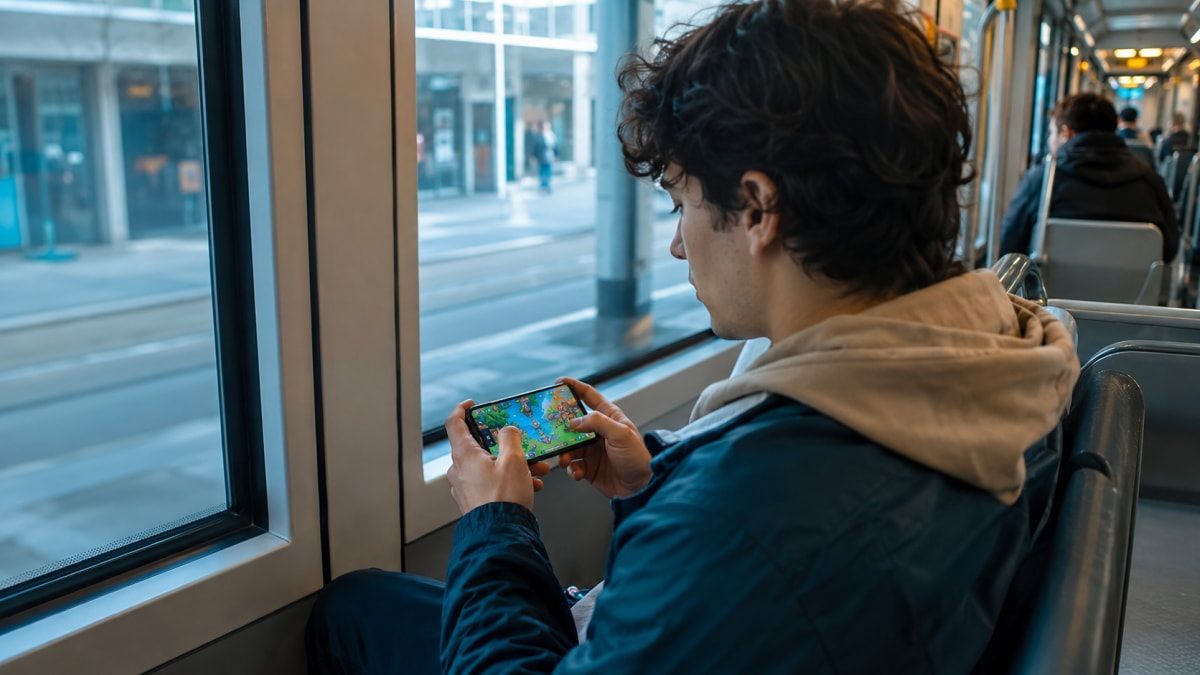
A person playing a hypercasual mobile game is almost certainly waiting for something - a train, a meeting to start, a queue to move. The session is short, unplanned, and low-stakes. This is not the moment for a brand integration that requires attention or investment from the player.
A core gamer settling into a 45-minute session of a strategy game or a simulation title is in a different mental state. They've made a deliberate choice to be here. They're engaged and focused. This is a moment where contextual integration - something that fits rather than interrupts - can build genuine familiarity with a brand.
A hardcore gamer who has cleared their evening for gaming is in a lean-forward state that most media channels cannot access at all. They're watching their favorite streamer, following tournament play, or running ranked matches. The brands that earn a place in this moment aren't interrupting it. They're part of it.
What segment determines: touchpoint selection
Once a brand understands its values, its connection to gaming motivation, and which player segment represents its target, touchpoint selection follows directly.
Casual audiences are accessible through mobile ad formats and rewarded video - standard media tools applied to a gaming context.
Core audiences are best reached through in-game integrations within specific titles, YouTube creators covering those titles, Discord communities, and gaming content that matches their specific genre interest.
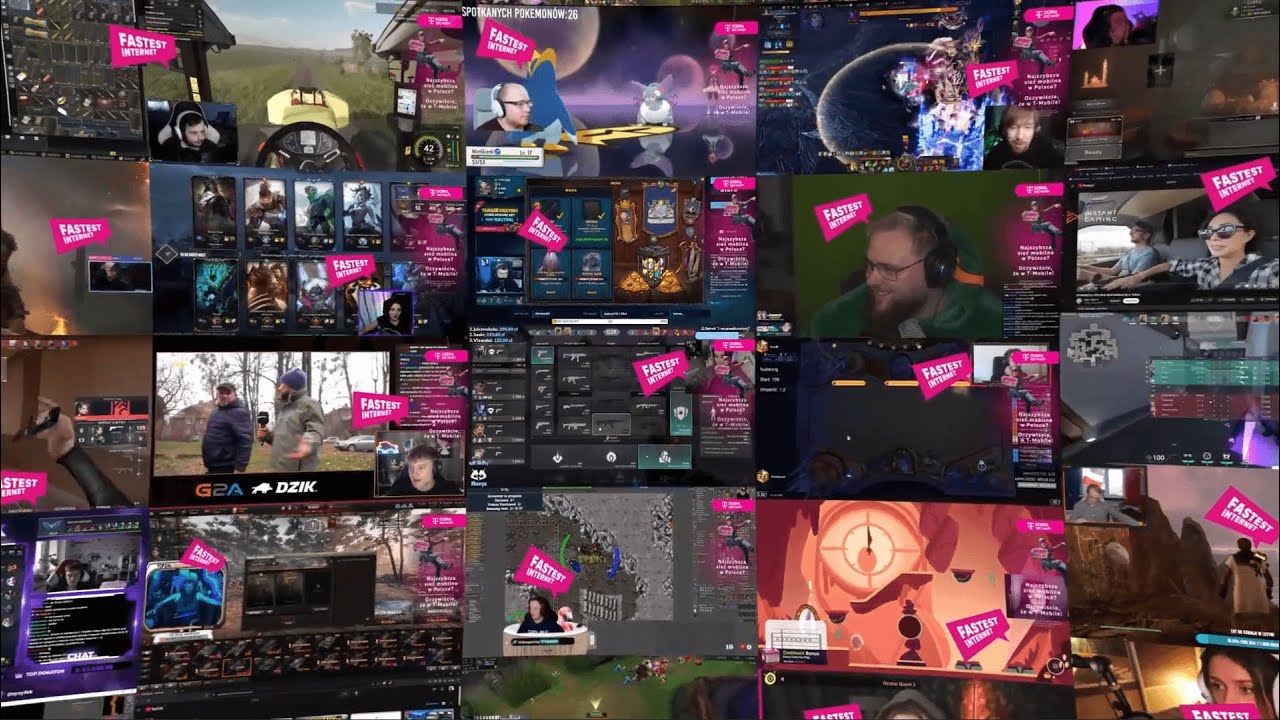
Hardcore audiences live on Twitch, in Reddit communities, and in the creator ecosystems around the games they follow. Campaigns that reach them need to feel native to these spaces. The T-Mobile "Fastest Network" campaign reached Polish hardcore gamers by building something that became part of the streaming vernacular - the phrase was spoken organically over 10,000 times across 275 streams. The creative integrated into the environment instead of interrupting it.
Two mistakes brands consistently make
The first is assuming gaming means competition. Esports and tournament formats are visible and easy to reference, which makes them the default option for brands entering gaming. But competitive formats appeal strongly to one type of player and leave others indifferent. A campaign structured entirely around ranking and winning speaks to competition-motivated players. It says very little to the player who games to build, explore, connect, or complete. Creating a tournament does not automatically make a brand relevant to the full gaming audience.
The second mistake is the opposite: trying to build a single campaign for everyone. A creative execution that resonates with a hardcore gamer on Twitch tends to feel too intense or insider-heavy for a casual mobile player. A format built for mass mobile reach tends to look under-invested to a hardcore gaming community. The segments exist because the people in them are genuinely different. A campaign that tries to speak to all of them simultaneously usually speaks clearly to none of them.
Before the brief: four questions
Before a gaming campaign brief is written, four questions need clear answers:
- What does this brand stand for, and what gaming motivation does that connect to?
Competition, exploration, achievement, social connection - the answer determines which audience and which creative territory. - Which segment is the primary target?
Casual audiences are reachable through gaming as media. Core and hardcore audiences require campaigns built for their specific context. - What is the session context for this segment?
Where is this person when they're gaming? What are they looking for from that session? - What role can the brand authentically play in that moment?
Not what the brand wants to say - what it can credibly be, given who this player is and why they're here.
Format selection is the last question, not the first. The formats that work for rewarded mobile video are useless for a hardcore Twitch community. The branded Fortnite map that generates 26 minutes of session time with a young core audience would be the wrong choice for reaching a casual mobile gamer during a commute. The brief that starts with "we want to run a gaming campaign" is incomplete. The brief that starts with the four questions above is ready to work.
Key takeaways for marketers
- "Gamers" is not a target group. Casual, core, and hardcore players have different contexts, motivations, and responses to brand presence.
- Gaming campaign strategy starts with the brand: what it stands for and which gaming motivation that connects to. Audience and format follow from that.
- Core and hardcore gamers are the primary target for most gaming campaigns because they're genuinely hard to reach through standard channels - gaming is where their attention actually lives.
- Motivation, not just time-spent, defines the audience. Gender differences in gaming motivation are measurable and affect campaign design.
- Two consistent brand mistakes: defaulting to competitive/esports formats as a proxy for "gaming," and trying to reach all segments with a single execution.